What Is Rezum Treatment? 8 Essential Facts for Better Relief
If you’ve been told you have an enlarged prostate and your doctor mentioned a new option, you’re probably asking: what is Rezum treatment, and is it right for you? In simple terms, Rezum treatment is a minimally invasive, water-vapor based therapy that shrinks excess prostate tissue so urine can flow normally again. Men in Kerala and across the country are increasingly choosing it over traditional surgery because it protects sexual function and gets you back to daily life within days, not weeks. This guide breaks down everything in plain language – no medical jargon, just the facts you need before your next doctor’s visit.
What Is Rezum Treatment?
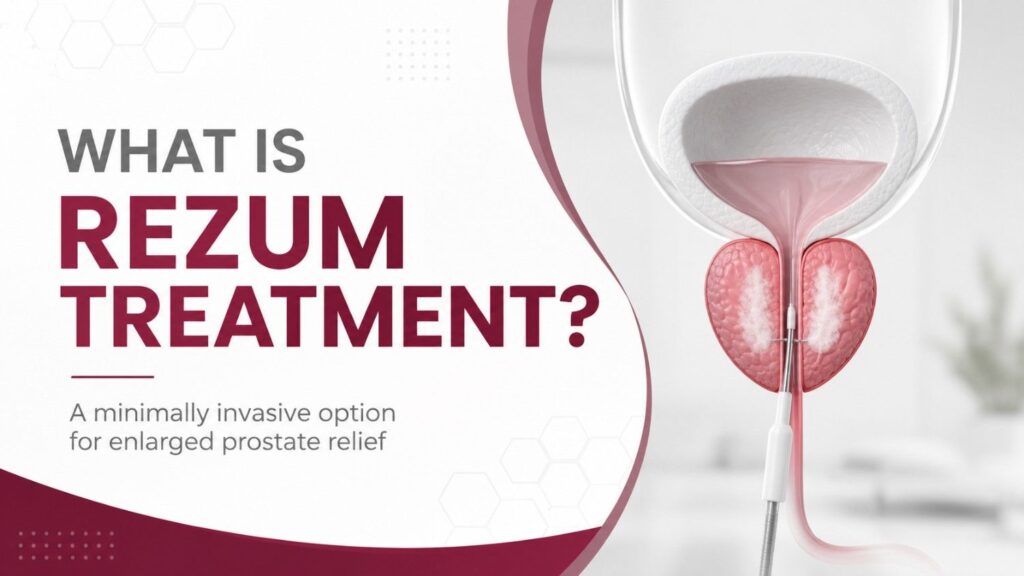
What is Rezum treatment? Rezum is a minimally invasive medical procedure used to treat lower urinary tract symptoms caused by benign prostatic hyperplasia.
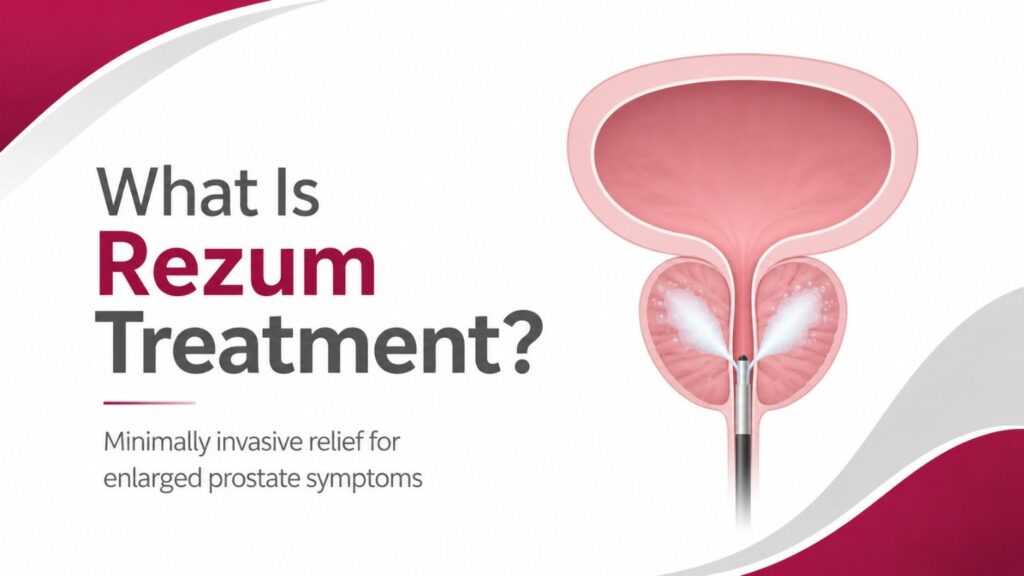
During the procedure, a specially designed device is passed through the urethra. Small, controlled amounts of sterile water vapour are delivered into selected areas of enlarged prostate tissue.
The heat energy within the vapour damages the targeted cells. Over the following weeks and months, the body naturally absorbs the treated tissue. This can reduce pressure around the urethra and improve the flow of urine.
The procedure does not require an external incision because the instrument reaches the prostate through the natural urinary passage. Rezum is intended to relieve symptoms and obstruction caused by BPH and is indicated by its manufacturer for men aged 50 and older.
What Condition Does Rezum Treatment Address?
To understand what is Rezum treatment?, it is important to understand the condition it is designed to manage.
Benign prostatic hyperplasia is a non-cancerous enlargement of the prostate gland. The prostate is positioned below the bladder and surrounds part of the urethra, which carries urine out of the body.
As the prostate becomes larger, it may compress or narrow the urethra. The bladder then has to work harder to push urine through the restricted passage.
BPH becomes more common with increasing age. Although it is not prostate cancer, untreated or severe obstruction can sometimes contribute to bladder problems, urinary infections, retention of urine or kidney complications.
What Causes the Prostate to Enlarge in the First Place?
Before understanding why Rezum treatment works so well, it helps to know why the prostate grows in the first place. BPH is extremely common as men age, and several factors contribute to it:
- Hormonal shifts – as testosterone levels change with age, the balance of hormones inside the prostate can trigger tissue growth.
- Age-related cell changes -the prostate naturally continues to grow throughout a man’s life, similar to how ears and nose cartilage keep changing shape.
- Family history – men with close relatives who had BPH are statistically more likely to develop it themselves.
- Lifestyle factors – reduced physical activity, obesity, and certain metabolic conditions have all been linked to faster prostate growth.
None of these causes are anyone’s fault, and BPH is not cancer. But as the prostate grows, it presses on the urethra, and that pressure is what leads men to eventually explore options like Rezum treatment.
Symptoms That May Lead to Rezum Treatment
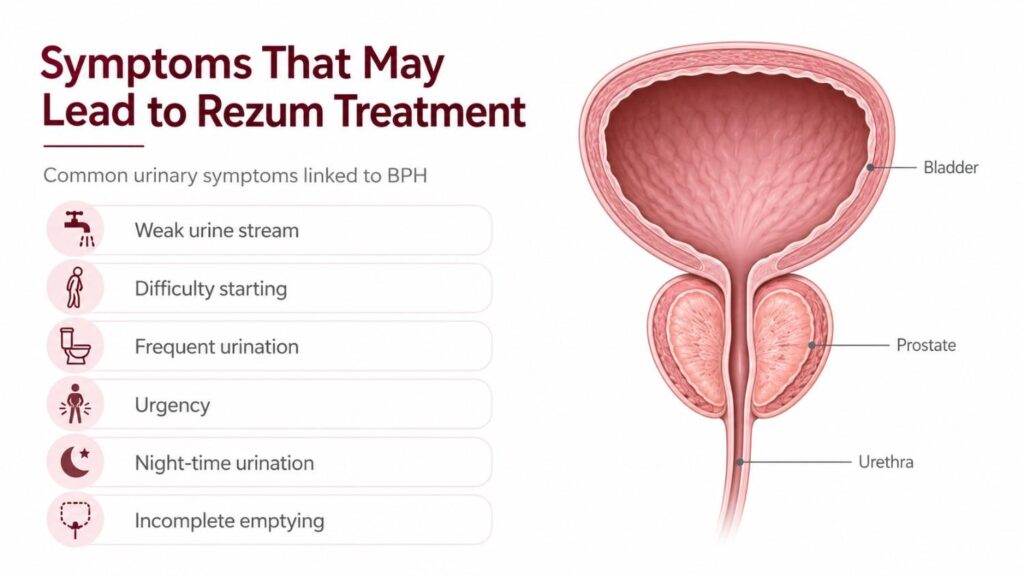
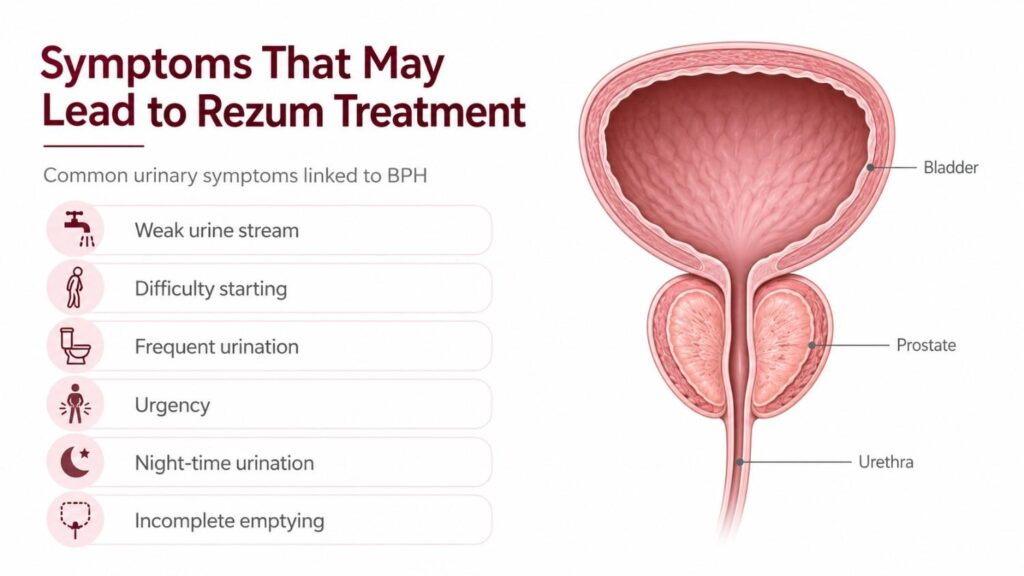
Men researching what is Rezum treatment? often experience lower urinary tract symptoms linked to BPH.
Common symptoms include:
- A weak or slow urine stream
- Difficulty starting urination
- Stopping and starting during urination
- Straining to empty the bladder
- Frequent urination
- Sudden urgency to urinate
- Waking several times at night to urinate
- Dribbling after urination
- Feeling that the bladder has not emptied completely
- Taking longer than usual to pass urine
The size of the prostate does not always match the severity of symptoms. A moderately enlarged prostate may cause significant obstruction, while a larger prostate may cause only mild symptoms.
Similar urinary complaints can also be caused by infection, bladder disorders, urethral narrowing, prostate inflammation, medication effects or prostate cancer. A proper urological assessment is therefore necessary before recommending Rezum treatment.
Types of BPH Treatment: Where Rezum Fits In
Doctors generally group BPH treatments into three broad categories, and understanding them helps explain why Rezum treatment has become so popular.
1. Medication-Based Management
Alpha-blockers and hormone-altering drugs can relax the muscles around the prostate or slow tissue growth. These are often the first step, but they need to be taken daily, can cause side effects like dizziness, and don’t actually shrink the prostate.
2. Traditional Surgical Procedures
Options like TURP (transurethral resection of the prostate) physically remove excess tissue. These are effective but come with longer hospital stays, longer recovery times, and a higher risk of side effects such as retrograde ejaculation or erectile difficulty.
3. Minimally Invasive Therapies
This is where Rezum treatment sits. It offers a middle ground — more effective and longer-lasting than medication, but far gentler than traditional surgery. It’s typically done as a single outpatient session with no incisions and no general anesthesia required in most cases.
Who Is a Good Candidate for Rezum Treatment?
Not every man with prostate symptoms needs Rezum treatment right away, but it tends to be a strong fit for men who:
- Are over 50 years old with a diagnosed enlarged prostate
- Have a prostate volume roughly between 30 and 80 cubic centimeters
- Want to avoid the recovery time and risks associated with traditional surgery
- Wish to preserve erectile and ejaculatory function
- Have not found lasting relief from medication alone
A urologist will typically confirm candidacy using a physical exam, a urine flow test, and sometimes imaging of the prostate before recommending Rezum treatment.
Key Benefits of Rezum Treatment
The reason Rezum treatment has gained so much attention among both doctors and patients comes down to a handful of clear advantages:
- Preserves sexual function – unlike many surgical alternatives, it carries a very low risk of affecting erectile or ejaculatory function.
- Quick, outpatient procedure – most sessions are completed in 15 to 20 minutes.
- Minimal downtime – many men return to light activities within a couple of days.
- No incisions or general anesthesia – it’s performed using local anesthesia in most cases.
- Long-lasting relief – clinical studies show symptom improvement that holds up for several years.
- Low complication rate – compared to traditional surgery, side effects tend to be mild and temporary.
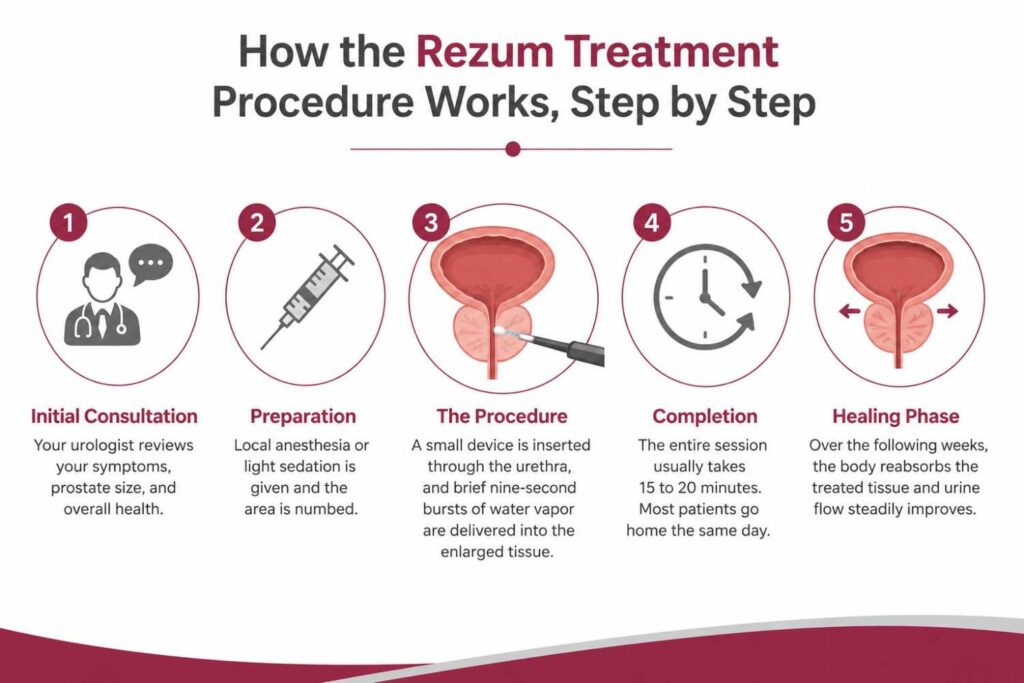
How the Rezum Treatment Procedure Works, Step by Step
Understanding the process can ease a lot of the anxiety around the unknown. Here’s what typically happens:
- Initial consultation – your urologist reviews your symptoms, prostate size, and general health to confirm Rezum treatment is appropriate.
- Preparation – local anesthesia or light sedation is given, and the treatment area is numbed.
- The procedure – a small device is inserted through the urethra, and brief nine-second bursts of water vapor are delivered into the enlarged tissue at specific points.
- Completion – the entire session usually wraps up within 15 to 20 minutes, and most patients go home the same day.
- Healing phase – over the following weeks, the body gradually reabsorbs the treated tissue, and urine flow steadily improves.
What to Expect During Recovery
Recovery from Rezum treatment is generally straightforward, but knowing what’s normal helps set the right expectations.
- A temporary urinary catheter may be needed for a few days while initial swelling settles.
- Mild burning during urination or slight blood in the urine is common for the first week or two.
- Full symptom relief typically builds gradually, with noticeable improvement by two weeks and continued progress over the next three months.
- Most men resume normal daily routines within two to three days.
Rezum Treatment vs. Other Modern BPH Options
Men researching their choices often compare Rezum treatment with other minimally invasive procedures such as UroLift or laser therapy. While each has its own advantages, Rezum treatment stands out because it doesn’t leave permanent implants in the body (unlike UroLift) and treats prostate tissue directly using the body’s own healing response rather than immediate tissue removal. This often makes it suitable for a wider range of prostate sizes and shapes.
Cost Considerations
The cost of the procedure varies depending on the hospital, the urologist’s experience, and whether diagnostic tests or a hospital stay are bundled into the package. Generally, it works out more affordable than traditional surgery once you factor in shorter recovery time, fewer follow-up visits, and less time away from work. It’s a good idea to ask for a clear breakdown of consultation fees, procedure charges, and any post-procedure medication before scheduling your date.
Life After the Procedure: What Long-Term Outlook Looks Like
One question that comes up often is how life changes months or years down the line. For most men, the improvement is steady rather than instant. By the three-month mark, the majority notice a stronger stream, fewer nighttime bathroom trips, and less urgency during the day. Clinical follow-up data spanning several years shows that these improvements tend to hold steady, with only a small percentage of patients needing a repeat procedure or additional medication later on.
It’s also worth noting that the therapy doesn’t prevent future prostate growth entirely — like any BPH treatment, ongoing checkups with a urologist help catch any changes early. Regular PSA screening and an annual prostate exam remain a good habit regardless of which treatment path you choose.
Lifestyle Habits That Support Long-Term Results
- Limit caffeine and alcohol in the evening to reduce nighttime urination.
- Maintain a healthy weight, since excess weight is linked to worsening BPH symptoms.
- Stay physically active with regular, moderate exercise.
- Keep up with annual prostate health checkups even after symptoms improve.
Conclusion
So, what is Rezum treatment in a nutshell? It’s a modern, minimally invasive way to treat an enlarged prostate using nothing more than water vapor – offering fast recovery, preserved sexual function, and long-lasting relief without major surgery. If BPH symptoms have been affecting your daily life, it’s worth discussing Rezum treatment with a qualified urologist to see whether it fits your situation. Men in Kerala now have access to this advanced option close to home, making it easier than ever to get expert care without long travel or extended hospital stays.For more information about prostate health, visit World Health Organization (WHO) .
FREQUENTLY ASKED QUESTIONS
JR Nathan Urology Center – Our Urology Specialists