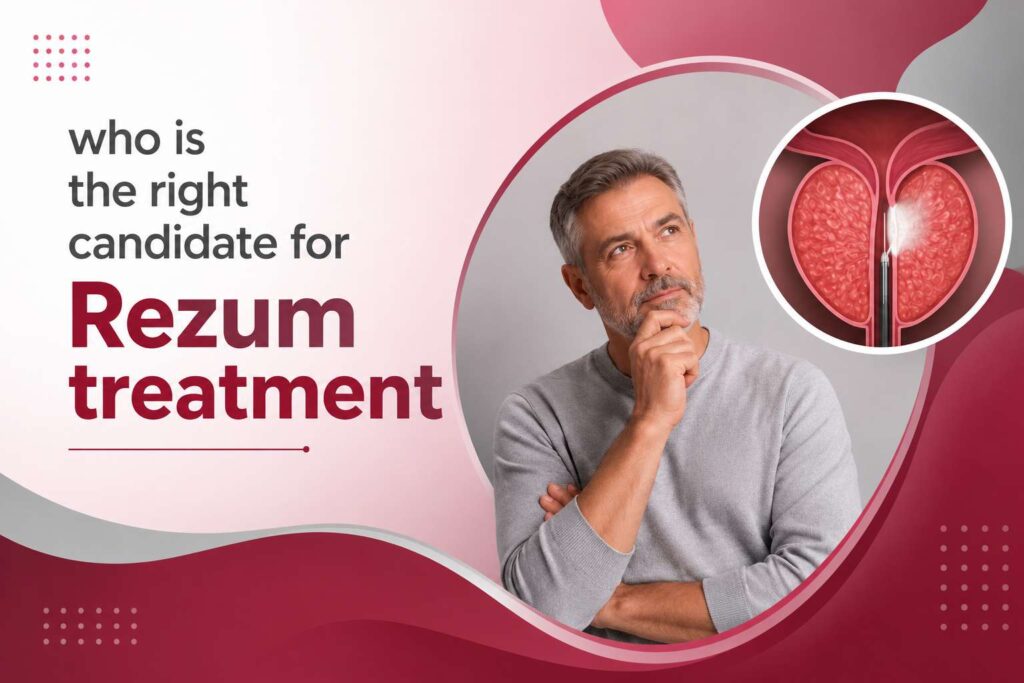
Illustration showing who is the right candidate for Rezum treatment for benign prostatic hyperplasia (BPH).

WHO IS THE RIGHT CANDIDATE FOR REZUM TREATMENT

7 Powerful Facts: Who Is the Right Candidate for Rezum Treatment

Living with an enlarged prostate can affect nearly every part of daily life. Frequent urination, waking several times during the night, a weak urine stream, and difficulty emptying the bladder are common symptoms that can reduce comfort and confidence. Many men search for a treatment that provides long-term relief without the risks associated with major surgery. If you are wondering who is the right candidate for Rezum treatment, understanding the procedure and its eligibility criteria is the first step toward making an informed decision.

Men in Thrissur who experience bothersome urinary symptoms caused by benign prostatic hyperplasia (BPH) are increasingly exploring minimally invasive options like Rezum therapy. Unlike traditional surgery, Rezum treatment uses the natural energy stored in water vapor to reduce excess prostate tissue while preserving healthy structures.

This guide explains who is the right candidate for Rezum treatment, how the procedure works, its benefits, who should avoid it, and what patients can expect before and after treatment.

What Is Rezum Treatment

Rezum treatment is a minimally invasive procedure designed to treat benign prostatic hyperplasia (BPH), commonly known as an enlarged prostate. During the procedure, sterile water vapor is delivered directly into the enlarged prostate tissue. The thermal energy from the steam destroys excess tissue, allowing the body to naturally absorb it over time.

As the treated tissue shrinks, pressure on the urethra decreases, making urination easier and reducing bothersome urinary symptoms.

Unlike conventional surgery, Rezum therapy does not require removing the prostate. Instead, it targets only the enlarged tissue responsible for urinary obstruction.

Understanding Benign Prostatic Hyperplasia (BPH)

Before understanding who is the right candidate for Rezum treatment, it is helpful to know what BPH is.

Benign prostatic hyperplasia is a non-cancerous enlargement of the prostate gland. It commonly develops as men grow older due to hormonal changes.

As the prostate enlarges, it compresses the urethra, restricting urine flow and causing lower urinary tract symptoms.

Common Symptoms of BPH

  • Frequent urination
  • Night-time urination (nocturia)
  • Weak urine stream
  • Difficulty starting urination
  • Sudden urge to urinate
  • Interrupted urine flow
  • Feeling that the bladder is not completely empty
  • Dribbling after urination

These symptoms often worsen gradually if left untreated.

Who Is the Right Candidate for Rezum Treatment?

Understanding who is the right candidate for Rezum treatment requires evaluating several medical factors rather than considering age alone.

Generally, Rezum therapy is recommended for men who:

Have Moderate to Severe BPH Symptoms

Men experiencing significant urinary difficulties despite lifestyle modifications are often excellent candidates.

Symptoms may include:

  • Frequent urination
  • Difficulty emptying the bladder
  • Reduced urine flow
  • Night-time urination
  • Urinary urgency

Want to Avoid Major Surgery

Many patients prefer minimally invasive treatments because they involve:

  • No large incisions
  • Shorter recovery
  • Lower surgical risks
  • Outpatient treatment
  • Faster return to normal activities

For these individuals, Rezum therapy can be an attractive alternative.

Wish to Preserve Sexual Function

One important reason many patients ask who is the right candidate for Rezum treatment is concern about sexual health.

Rezum therapy has been developed to minimize damage to the structures responsible for ejaculation and erectile function compared with some traditional prostate surgeries.

Although every medical procedure carries risks, many men choose Rezum because of its favorable safety profile.

Have a Prostate Within the Recommended Size

Rezum treatment is generally recommended for men whose prostate falls within an appropriate size range as determined through clinical evaluation.

Your urologist may perform:

  • Ultrasound
  • Physical examination
  • PSA testing
  • Urine flow studies
  • Cystoscopy (when required)

These investigations help determine whether Rezum is suitable.

Have Not Responded Well to Medication

Many patients initially manage BPH with medications.

However, medicines may:

  • Become less effective
  • Cause dizziness
  • Lead to low blood pressure
  • Reduce libido
  • Cause ejaculation problems

If medications no longer provide sufficient relief, Rezum may become the next treatment option.

Prefer an Outpatient Procedure

Rezum therapy is usually completed in a relatively short time.

Patients often appreciate that:

  • Hospital stay is minimal
  • General anesthesia may not be necessary
  • Recovery is comparatively quick
  • Most daily activities can resume within days

Who May Not Be the Right Candidate

Although Rezum benefits many patients, it is not suitable for everyone.

Some individuals may require alternative treatments if they have:

  • Active urinary tract infection
  • Untreated prostate cancer
  • Very large prostate glands beyond recommended treatment limits
  • Certain urinary tract abnormalities
  • Specific neurological bladder disorders
  • Medical conditions requiring different surgical approaches

A complete medical evaluation is essential before deciding on treatment.

Benefits of Rezum Treatment

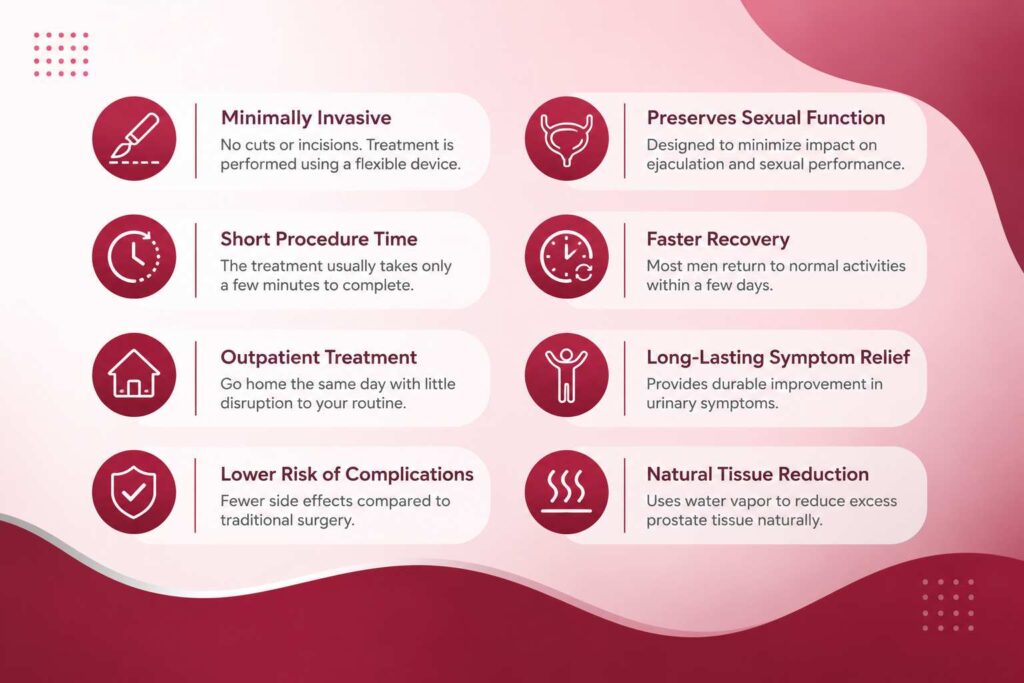
Infographic highlighting the key benefits of Rezum treatment for benign prostatic hyperplasia (BPH), including faster recovery and minimally invasive care.

Understanding the advantages helps explain who is the right candidate for Rezum treatment.

Minimally Invasive

No surgical removal of prostate tissue is required.

Natural Tissue Reduction

The body gradually absorbs treated tissue over several weeks.

Reduced Hospital Stay

Many patients return home the same day.

Lower Risk of Major Complications

Compared with traditional surgery, Rezum generally involves fewer serious complications.

Durable Symptom Relief

Clinical studies have shown lasting improvement in urinary symptoms for many patients.

Improved Quality of Life

Patients often report improvements in:

  • Sleep quality
  • Daily comfort
  • Confidence
  • Bladder emptying
  • Urinary flow
  • Overall wellbeing

How Doctors Determine Eligibility

Several factors help determine who is the right candidate for Rezum treatment.

Medical History

Doctors review:

  • Existing illnesses
  • Current medications
  • Previous prostate treatments
  • Urinary symptoms

Physical Examination

A digital rectal examination helps assess prostate enlargement.

Urine Testing

Urine tests help identify infection or blood in urine.

PSA Blood Test

PSA testing helps evaluate prostate health.

Imaging

Ultrasound provides information about prostate size and anatomy.

Symptom Assessment

Validated questionnaires help measure symptom severity before treatment.

What Happens During Rezum Treatment

The procedure generally follows these steps:

  1. Local anesthesia or sedation is administered.
  2. A specialized device is inserted through the urethra.
  3. Water vapor is delivered into enlarged prostate tissue.
  4. Each steam injection lasts only a few seconds.
  5. The procedure is completed without external incisions.
  6. A temporary urinary catheter may be placed if necessary.
  7. Patients usually return home the same day.

Recovery After Rezum Treatment

Recovery is generally straightforward, although improvements occur gradually.

Many patients notice:

  • Mild burning during urination
  • Small amounts of blood in urine
  • Increased urinary frequency for a short period
  • Mild discomfort

These effects usually improve as healing progresses.

Symptom improvement often becomes noticeable over several weeks as the body naturally removes treated tissue.

Expected Results After Rezum Treatment

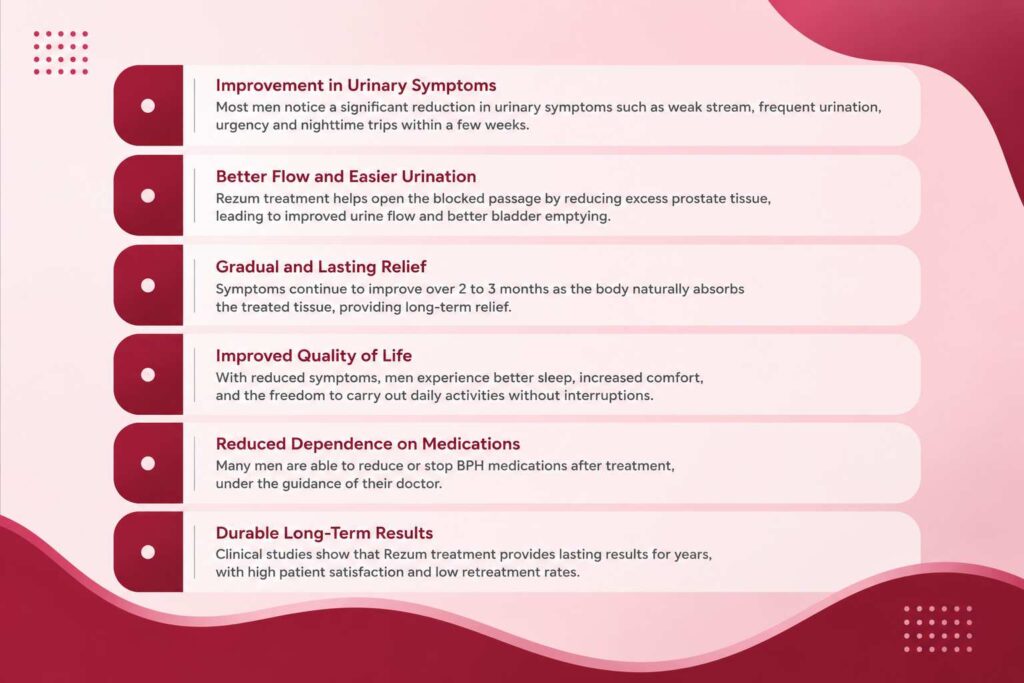
Infographic showing the expected results after Rezum treatment for benign prostatic hyperplasia (BPH), including improved urinary flow and long-term symptom relief.

One of the reasons many patients ask who is the right candidate for Rezum treatment is the long-term improvement it can provide. Unlike medications that only control symptoms while they are being taken, Rezum therapy treats the enlarged prostate tissue that causes urinary obstruction.

Most patients experience gradual improvement because the body needs time to absorb the treated tissue. While some men notice positive changes within a few weeks, others continue to improve over the next two to three months.

Common improvements include:

  • Stronger urine flow
  • Reduced urinary frequency
  • Less urgency to urinate
  • Fewer night-time bathroom visits
  • Better bladder emptying
  • Improved comfort during urination
  • Better quality of sleep
  • Enhanced overall quality of life

The rate of improvement varies from person to person depending on factors such as prostate size, overall health, and the severity of symptoms before treatment.

How to Prepare for Rezum Treatment

Proper preparation can help ensure a smoother procedure and recovery.

Before the treatment, your healthcare provider may recommend:

  • Reviewing all current medications
  • Temporarily stopping certain blood-thinning medicines if advised
  • Completing urine and blood tests
  • Undergoing imaging studies if required
  • Arranging transportation home after the procedure
  • Following fasting instructions if sedation will be used
  • Discussing any allergies or existing medical conditions

Following all pre-procedure instructions helps reduce the risk of complications and supports better outcomes.

Recovery Tips After Rezum Therapy

Recovery is usually straightforward, but following your healthcare provider’s advice is important.

Helpful recovery tips include:

Stay Hydrated

Drinking enough water helps flush the urinary tract and supports healing.

Avoid Heavy Lifting

Strenuous physical activity should be limited during the initial recovery period.

Take Medications as Prescribed

Complete any prescribed medications exactly as directed.

Follow Catheter Care Instructions

If a temporary catheter is used, keep it clean and follow all care recommendations until it is removed.

Attend Follow-Up Visits

Regular follow-up appointments allow your healthcare provider to monitor healing and evaluate symptom improvement.

Be Patient

Rezum treatment works gradually. It may take several weeks before the full benefits become noticeable.

Possible Side Effects

Like any medical procedure, Rezum therapy can cause temporary side effects. Fortunately, most are mild and resolve during recovery.

Possible side effects include:

  • Burning during urination
  • Blood in the urine
  • Blood in the semen
  • Increased urinary frequency
  • Mild pelvic discomfort
  • Temporary urgency
  • Temporary difficulty urinating
  • Short-term catheter use

Serious complications are uncommon, but patients should contact their healthcare provider if they experience severe pain, fever, heavy bleeding, or an inability to urinate.

When Should You Consider Rezum Treatment

You should speak with a qualified healthcare professional if:

  • Urinary symptoms interfere with daily life.
  • Medications are no longer providing sufficient relief.
  • You wish to avoid major prostate surgery.
  • You are looking for a minimally invasive treatment option.
  • Your urinary symptoms continue to worsen over time.
  • You want a treatment that targets the underlying cause of BPH.

An individual assessment is always necessary to determine the most appropriate treatment.

Conclusion

Understanding who is the right candidate for Rezum treatment is essential before choosing any treatment for benign prostatic hyperplasia. Men experiencing bothersome urinary symptoms, those seeking a minimally invasive alternative to surgery, and individuals who have not achieved adequate relief with medication may benefit from this innovative procedure. Since every patient has unique medical needs, a thorough evaluation is necessary to determine the most suitable treatment plan. If you are considering options for managing an enlarged prostate, discussing who is the right candidate for Rezum treatment with a qualified healthcare professional can help you make an informed decision and choose the approach that best supports your long-term urinary health in Thrissur. For more information about benign prostatic hyperplasia (BPH) and available treatment options, visit the National Institute of Diabetes and Digestive and Kidney Diseases (NIDDK) .

Frequently Asked Questions

Men with moderate to severe urinary symptoms caused by benign prostatic hyperplasia (BPH), particularly those who have not responded well to medication and prefer a minimally invasive treatment, are often suitable candidates.

The procedure is generally performed with local anesthesia or sedation, helping to minimize discomfort. Mild soreness may occur during recovery.

The treatment itself usually takes only a few minutes, although the total clinic visit may be longer due to preparation and recovery.

Some patients notice improvement within a few weeks, while others experience gradual benefits over two to three months.

Some patients require a temporary urinary catheter for a short period following treatment, depending on their condition.


For many suitable patients with BPH, Rezum provides an effective minimally invasive alternative to traditional surgery. However, not every patient is an appropriate candidate.


Rezum reduces the enlarged prostate tissue responsible for urinary obstruction and provides long-lasting symptom relief, although regular follow-up remains important.


Age alone does not determine eligibility. Overall health, prostate size, and symptom severity are more important factors.

Rezum directly treats the enlarged tissue, whereas medications mainly help control symptoms while they are being taken.

Many patients experience durable improvement in urinary symptoms, better bladder function, improved sleep, and an enhanced quality of life.


.jrnc-doctors{display:grid;grid-template-columns:repeat(2,1fr);gap:35px;max-width:900px;margin:40px auto} .jrnc-doctor-card{display:flex;align-items:center;gap:20px;padding:20px;border:1px solid #e6e6e6;border-radius:12px;background:#fff;box-shadow:0 3px 10px rgba(0,0,0,0.05)} .jrnc-doctor-card img{width:180px;height:180px;object-fit:cover;border-radius:10px} .jrnc-doctor-info h3{margin:0 0 6px;font-size:20px} .jrnc-doctor-info h3 a{text-decoration:none;color:#222} .jrnc-doctor-info h3 a:hover{color:#0c7a7a} .jrnc-doctor-info p{margin:3px 0;font-size:14px;color:#555} .jrnc-role{font-weight:600;color:#333} @media(max-width:700px){.jrnc-doctors{grid-template-columns:1fr}}

JR Nathan Urology Center – Our Urology Specialists

Dr Jithunath M R

Dr Jithunath M R

MBBS, MS (General Surgery), DNB, MCh

Consultant Urologist & Andrologist

Dr Anoop K Sankar

Dr Anoop K Sankar

MBBS, MS (General Surgery), MCh

Consultant Urologist & Laparoscopic Uro Surgeon

Dr KK Ramachandran

Dr KK Ramachandran

MBBS, FRCS

Consultant Urologist

Dr Sanju Unnikrishnan

Dr Sanju Unnikrishnan

MBBS, MS (General Surgery), MCh Urology

Consultant Urologist

<?php return ob_get_clean(); }

Leave a Comment

Your email address will not be published. Required fields are marked *

Phone icon
WhatsApp icon