Recovery After Rezum Treatment: What You Need to Know
If you’re considering Rezum therapy for Benign Prostatic Hyperplasia (BPH), one of the biggest questions you’ll probably have is about Recovery After Rezum Treatment. While the procedure itself is minimally invasive, understanding what happens during the recovery period can help you prepare for a smoother healing process and set realistic expectations.
Unlike traditional prostate surgery, Rezum therapy uses targeted water vapor to reduce excess prostate tissue without major incisions. As a result, Recovery After Rezum Treatment is generally shorter, less painful, and allows most patients to return to normal daily activities relatively quickly. However, the healing process varies from person to person, and knowing what to expect during each stage can make recovery less stressful.
Understanding Rezum Therapy
Benign Prostatic Hyperplasia (BPH) is a common condition in which the prostate gland enlarges with age, compressing the urethra and making urination difficult.
Common symptoms include:
- Frequent urination
- Weak urine stream
- Difficulty starting urination
- Incomplete bladder emptying
- Nighttime urination
- Urinary urgency
Rezum therapy treats these symptoms by delivering controlled water vapor directly into enlarged prostate tissue. The steam destroys excess cells while preserving surrounding healthy tissue. Over the following weeks, the body naturally absorbs the treated tissue, creating more space for urine to flow.
Because the body requires time to remove this tissue, Recovery After Rezum Treatment occurs gradually rather than immediately. If you’d like to learn more about how the procedure works, who is a suitable candidate, and what to expect before treatment, explore our comprehensive guide on Rezum Treatment in Kerala.
Why Recovery Takes Time
One misconception is that urinary symptoms improve instantly after the procedure.
In reality, healing happens in stages.
Following treatment:
- The prostate temporarily becomes swollen.
- The body’s immune system removes treated tissue.
- Inflammation gradually decreases.
- Urinary flow steadily improves.
This natural healing process explains why patients may experience temporary urinary symptoms before noticing significant improvements.
Understanding this timeline helps reduce unnecessary anxiety during Recovery After Rezum Treatment.
What Happens Immediately After the Procedure?
Most patients return home on the same day because Rezum is an outpatient procedure.
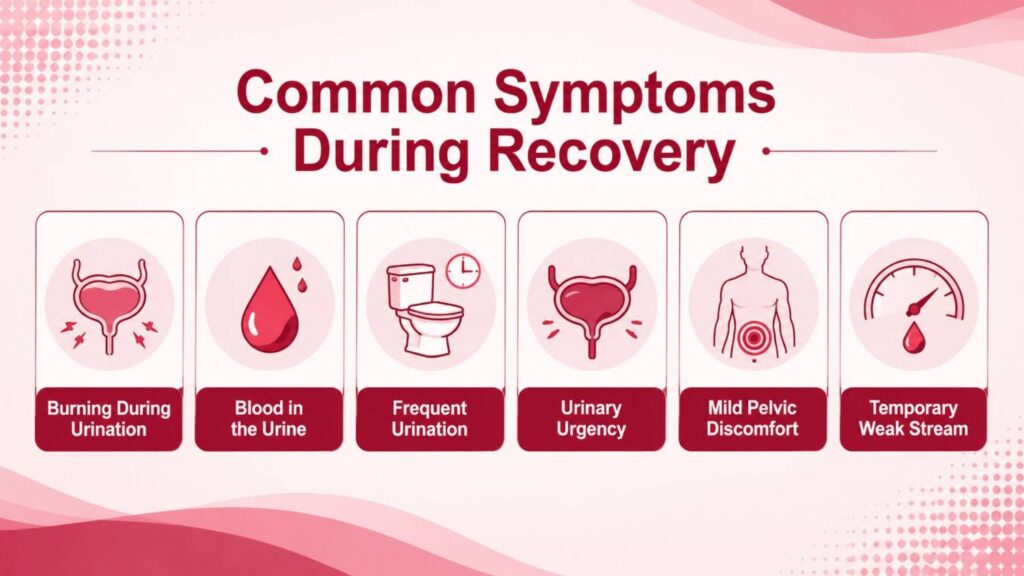
Immediately afterward, you may experience:
- Mild burning during urination
- Increased urinary frequency
- Small amounts of blood in urine
- Mild pelvic discomfort
- Temporary urgency
These symptoms are generally expected and gradually improve as healing progresses.
Many patients also leave with a temporary urinary catheter to support bladder drainage while swelling subsides.
Recovery Timeline After Rezum Treatment
First 24 Hours
The first day focuses primarily on rest.
Patients should:
- Stay hydrated
- Avoid strenuous activities
- Take prescribed medications
- Rest as much as possible
Some discomfort while urinating is normal during this period.
First Week
During the first week:
- Urinary urgency may increase.
- Burning sensations gradually lessen.
- Blood in urine usually decreases.
- Mild fatigue may occur.
Patients should avoid heavy lifting and intense exercise.
Although symptoms may temporarily seem worse, this does not necessarily indicate a problem.
Weeks Two to Four
This stage marks active healing.
During this period:
- Swelling begins decreasing.
- Urinary flow slowly improves.
- Bladder emptying becomes easier.
- Urinary frequency starts reducing.
Many patients begin noticing meaningful symptom improvement during these weeks.
This is often the most encouraging phase of Recovery After Rezum Treatment.
One to Three Months
By this stage:
- Most swelling has resolved.
- Treated tissue continues shrinking.
- Urinary symptoms improve significantly.
- Nighttime urination often decreases.
- Quality of life improves.
Many patients experience their maximum benefits within three months.
Three to Six Months
Healing continues even after noticeable improvement.
Patients frequently report:
- Stable urinary flow
- Better bladder control
- Reduced urgency
- Long-lasting symptom relief
The body’s natural healing process completes gradually.
Catheter Care During Recovery
Not every patient requires a catheter, but many do.
If a catheter is placed:
- Keep the drainage bag below bladder level.
- Drink plenty of fluids.
- Avoid pulling or twisting the tubing.
- Wash your hands before handling it.
- Follow cleaning instructions carefully.
The catheter is usually removed within several days depending on individual recovery.
Tips for a Faster Recovery After Rezum Treatment
Although healing follows its own pace, healthy habits may support recovery.
Stay Hydrated
Water helps flush the urinary system and may reduce irritation.
Follow Medication Instructions
Take prescribed medications exactly as directed.
Avoid Heavy Lifting
Heavy physical activity may increase discomfort during early healing.
Eat a Balanced Diet
Nutritious meals support tissue repair and overall recovery.
Prevent Constipation
Straining during bowel movements may increase pelvic discomfort.
High-fiber foods and adequate hydration can help.
Get Enough Rest
Your body heals more effectively when adequately rested.
Attend Follow-Up Visits
Regular follow-up appointments allow healthcare providers to monitor healing and recovery progress.
Activities to Avoid During Recovery
To promote safe healing, patients are generally advised to avoid:
- Heavy lifting
- Vigorous exercise
- Cycling
- Motorbike riding
- Long periods of sitting
- Alcohol (during early recovery if advised)
- Smoking whenever possible
Gradually returning to normal activities helps reduce irritation.
When Can You Return to Work?
Recovery depends on the nature of your job.
Office workers often return within a few days.
People performing physically demanding work may require additional recovery time before resuming full duties.
Following medical advice is always recommended.
When Can You Resume Exercise?
Walking is usually encouraged shortly after treatment.
More strenuous exercise should typically wait until your healthcare provider confirms adequate healing.
Starting slowly allows the body to adapt comfortably.
Sexual Activity After Recovery
Many patients ask when intimacy can resume.
Healthcare providers generally recommend waiting until early healing has progressed and urinary symptoms have stabilized.
Following personalized medical advice helps minimize discomfort during recovery.
Signs That Recovery Is Progressing Normally
Positive signs include:
- Stronger urine stream
- Reduced urinary urgency
- Easier bladder emptying
- Less nighttime urination
- Improved comfort while urinating
- Gradual improvement week after week
Patience is important because healing continues over several months.
When Should You Contact Your Healthcare Provider?
While mild symptoms are expected, seek medical attention if you experience:
- High fever
- Severe pain
- Heavy bleeding
- Inability to urinate
- Large blood clots
- Persistent worsening symptoms
- Signs of infection
Early evaluation helps address complications promptly.
Benefits of Following Recovery Guidelines
Patients who carefully follow recovery recommendations often experience:
- Better healing
- Reduced discomfort
- Lower risk of complications
- Faster return to daily activities
- Improved urinary function
- Greater long-term satisfaction
Recovery is not only about healing but also about maximizing the long-term benefits of Rezum therapy.
Conclusion
Understanding Recovery After Rezum Treatment helps patients approach the healing process with realistic expectations and greater confidence. While improvements may not occur immediately, most individuals experience gradual symptom relief as swelling decreases and the body naturally absorbs the treated prostate tissue.
By staying hydrated, following medical advice, avoiding strenuous activities during the early healing phase, and attending follow-up appointments, patients can support a smoother recovery and maximize the long-term benefits of Rezum therapy. Although recovery timelines vary, patience and proper post-procedure care play an important role in achieving lasting improvement in urinary symptoms and overall quality of life. To learn more about Benign Prostatic Hyperplasia (BPH), its symptoms, treatment options, and what to expect during recovery, visit the Mayo Clinic – Benign Prostatic Hyperplasia (BPH).
Frequently Asked Questions
It is generally recommended to arrange for someone to drive you home after the procedure, especially if sedation or anesthesia has been used. Your healthcare provider will let you know when it is safe to drive again.
Yes. Mild fatigue is common after minimally invasive procedures. Adequate rest, hydration, and following your recovery plan can help restore your energy.
Your healthcare provider may recommend suitable pain relief if needed. Always use medications only as advised during your recovery.
A balanced diet rich in fiber, fruits, vegetables, and adequate fluids can support healing and help prevent constipation during recovery.
Long-distance travel should be discussed with your healthcare provider, particularly if you still have a urinary catheter or are experiencing ongoing recovery symptoms.
Yes. Urinary symptoms may improve gradually and occasionally fluctuate as the treated prostate tissue heals and the body continues its natural recovery process.
Most regular medications can be resumed according to your healthcare provider's instructions. Always follow their advice, especially if you take blood thinners.
Staying hydrated, limiting caffeine and alcohol, avoiding foods that trigger irritation, and following your healthcare provider's recommendations may help reduce bladder discomfort.
While stress does not directly affect the treated prostate, managing stress through proper rest, gentle activity, and healthy habits may contribute to a smoother recovery experience.
Recovery usually involves gradual improvement in urinary symptoms over several weeks. Regular follow-up appointments help confirm that healing is progressing normally.
JR Nathan Urology Center – Our Urology Specialists