Can Rezum Treatment Help You Avoid Prostate Surgery?
Benign prostatic hyperplasia (BPH) can cause weak urine flow, frequent urination, urgency, nighttime bathroom trips, and incomplete bladder emptying, affecting sleep and quality of life. When medicines no longer provide adequate relief, many men wonder whether traditional prostate surgery is their only option.
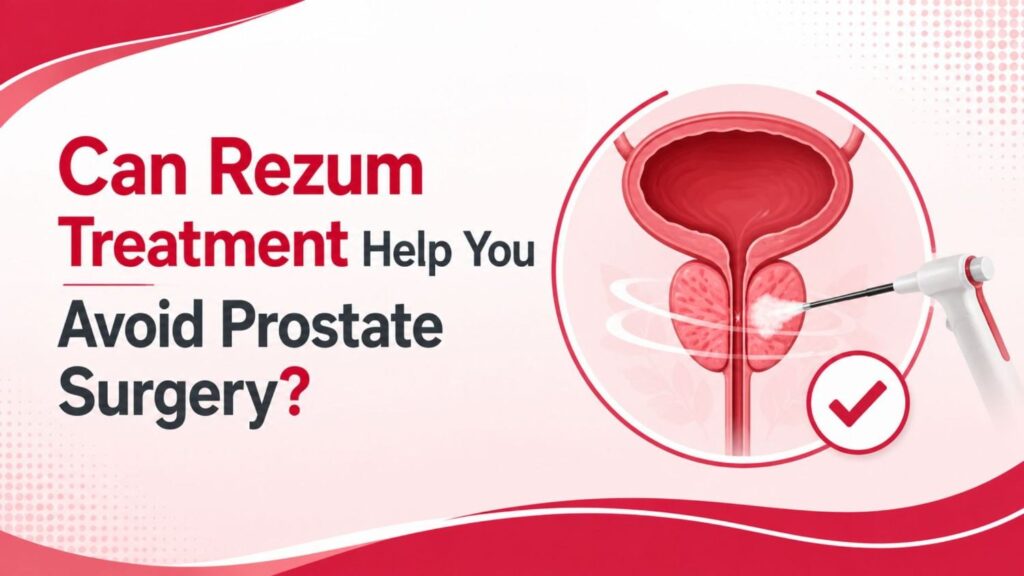
Can Rezum Treatment Help You Avoid Prostate Surgery? For appropriately selected men, Rezum water vapor therapy may offer a minimally invasive alternative to some conventional prostate procedures by using controlled water vapour to target obstructive prostate tissue, which the body gradually absorbs during healing. However, suitability depends on factors such as prostate size, anatomy, symptom severity, urinary flow, medical history, previous treatment, and individual treatment goals.
What Is Rezum Treatment?
Rezum Treatment is a minimally invasive water vapor therapy designed to reduce excess prostate tissue associated with BPH. During the procedure, a urologist introduces a specialised treatment device through the urethra and delivers controlled amounts of sterile water vapour into selected areas of the prostate.
Each treatment releases thermal energy into the targeted tissue. Over the following weeks, the body’s natural healing response gradually removes the treated tissue. This can reduce the obstruction around the urethra and improve urinary flow.
Unlike procedures that surgically cut or remove prostate tissue, Rezum does not require an external incision. It is generally performed as an outpatient or short-stay procedure, depending on the patient’s circumstances and the treating centre.
How Does Rezum Water Vapor Therapy Work?
The basic process involves:
- A urologist examining the prostate and identifying areas contributing to obstruction.
- A small treatment instrument being guided through the urethra.
- Controlled water vapour being delivered into selected prostate tissue.
- Thermal energy damaging the targeted cells.
- The body gradually absorbing the treated tissue.
- The urinary passage becoming less restricted as healing progresses.
The number of steam treatments depends on prostate size and anatomy. Patient responses also vary, so improvement should not be expected immediately in every case. Some patients may begin noticing symptom relief within around two weeks, while maximum benefit may take approximately three months.
Why Does the Prostate Become Enlarged?
Understanding BPH helps explain why Rezum may be considered. The prostate sits below the bladder and surrounds part of the urethra. As men age, the prostate can gradually increase in size. When enlarged tissue presses against the urethra, urine may have difficulty passing freely.
BPH is not the same as prostate cancer. It is a benign enlargement, although urinary symptoms should still be evaluated because similar symptoms can have other causes.
Common Factors Associated With BPH
Factors associated with BPH can include:
- Increasing age
- Family history
- Metabolic health
- Hormonal changes
- Obesity and reduced physical activity
- Certain lifestyle factors
An enlarged prostate does not always mean that treatment is immediately necessary. Some men have significant enlargement with relatively few symptoms, while others experience troublesome urinary symptoms despite a less enlarged prostate.
When Do BPH Symptoms Need Treatment?
BPH can cause lower urinary tract symptoms that develop gradually. These symptoms may initially seem manageable, but persistent urinary problems can eventually interfere with everyday activities.
Common symptoms include:
- Weak urine stream
- Difficulty starting urination
- Frequent urination
- Sudden urinary urgency
- Waking several times at night to urinate
- Interrupted or irregular urine flow
- Dribbling after urination
- Feeling that the bladder has not emptied completely
- Straining to urinate
Symptoms can affect sleep, travel, work, exercise, and social activities. Persistent symptoms should be assessed rather than automatically attributed to ageing.
How Can Rezum Help You Avoid Prostate Surgery?
Can Rezum Treatment Help You Avoid Prostate Surgery? For some appropriately selected men, Rezum may provide an alternative to conventional prostate procedures. The main difference lies in how the obstructive prostate tissue is treated.
Traditional procedures may physically cut, resect, or remove prostate tissue. Rezum instead uses controlled water vapour to deliver thermal energy into selected areas of the prostate. The treated tissue is then gradually absorbed by the body during the healing process.
This approach means that Rezum does not rely on immediately removing all obstructive tissue. Instead, the prostate changes progressively as healing takes place. Some patients may notice improvement within approximately two weeks, while maximum benefit can take around three months.
Therefore, the potential advantage of Rezum is not simply that it avoids an external surgical incision. It provides a different treatment pathway for men whose prostate size, anatomy, symptoms, and overall health make water vapor therapy appropriate.
Who May Be Considered for Rezum?
Can Rezum Treatment Help You Avoid Prostate Surgery? Patient selection is one of the most important factors in answering that question.
The source material states that official Rezum information indicates the system is indicated for men aged 50 years or older with prostate volumes between 30 cm³ and 80 cm³. However, suitability still needs to be determined by a qualified urologist after evaluating the individual patient.
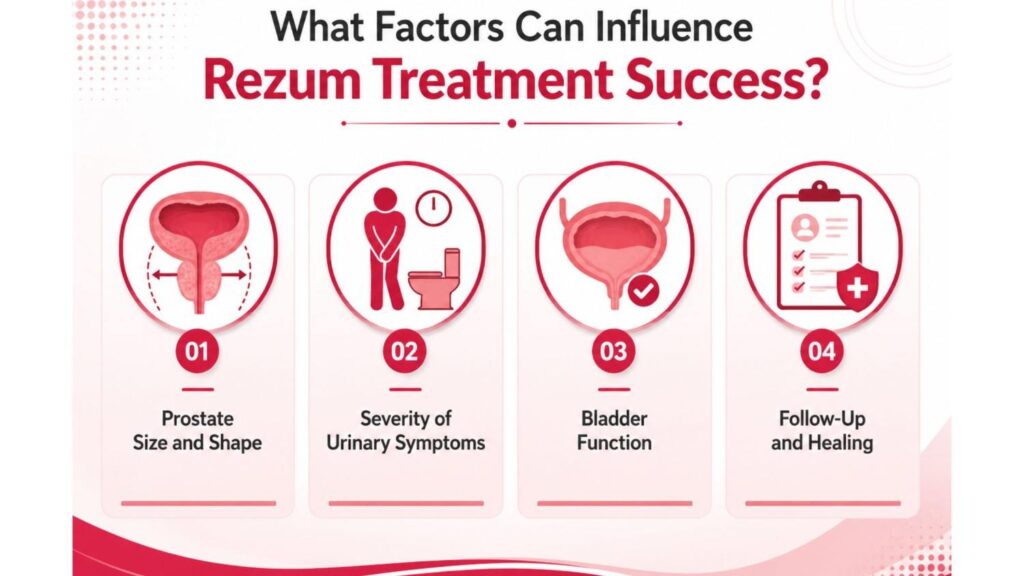
A doctor may consider several factors before recommending Rezum.
1. Severity of Symptoms
The International Prostate Symptom Score, or IPSS, can help quantify how strongly urinary symptoms affect daily life.
2. Prostate Size
Ultrasound and other investigations may help determine prostate volume and anatomy. Prostate size can influence which treatment options are appropriate.
3. Urinary Flow
A uroflowmetry test can provide information about urine flow rate and help assess possible obstruction.
4. Residual Urine
Post-void residual measurement shows how much urine remains in the bladder after urination and can provide useful information for treatment planning.
5. Prostate Anatomy
The presence and position of a median lobe or other anatomical features can influence treatment planning.
6. Previous Treatment
A history of medications, urinary procedures, catheterisation, or previous prostate surgery may affect the choice of treatment.
7 Important Benefits of Rezum Therapy
1. Minimally Invasive Approach
One of the main advantages of Rezum is that the procedure uses a transurethral approach rather than an external surgical incision.
2. Targets Obstructive Prostate Tissue
Rezum is designed to deliver thermal energy directly into prostate tissue contributing to urinary obstruction.
3. Relatively Short Procedure
The treatment itself can be relatively brief, although the complete hospital or clinic visit can take longer depending on preparation, anaesthesia, monitoring, and recovery.
4. Potential Preservation of Sexual Function
Sexual function is an important consideration for many men choosing a BPH procedure. Clinical literature has reported preservation of sexual function as an important feature of water vapor therapy, although individual outcomes can vary.
5. No External Surgical Incision
Because Rezum is delivered through the urinary passage, there is no abdominal or perineal incision. This makes the approach different from conventional open or incision-based surgical procedures.
6. Gradual Improvement
Rezum works through the body’s healing response rather than instantly removing all obstructive tissue. Improvement therefore develops progressively.
7. Long-Term Symptom Improvement
Available clinical evidence supports sustained symptom improvement following water vapor therapy, with official patient information reporting results extending to five years in clinical studies.
These benefits do not mean that Rezum is automatically better than every other BPH treatment. The appropriate option depends on the individual patient’s anatomy, symptoms, prostate size, expectations, and medical history.
What Happens Before Rezum Treatment?
Can Rezum Treatment Help You Avoid Prostate Surgery? A proper consultation should come before deciding whether water vapor therapy is appropriate.
The urologist may review:
- Duration and severity of urinary symptoms
- Previous prostate treatment
- Current medications
- Existing medical conditions
- Sexual and urinary function
- Previous urinary infections
- History of urinary retention
- Blood-thinning medications
Depending on the case, investigations may include:
- Urine testing
- PSA testing
- Ultrasound
- Uroflowmetry
- Post-void residual measurement
- Other relevant assessments
The purpose of these tests is not simply to confirm prostate enlargement. They help determine whether BPH is responsible for the symptoms and whether a minimally invasive treatment is appropriate.
What Happens During the Rezum Procedure?
On treatment day, the patient receives appropriate anaesthesia or sedation according to the doctor’s assessment and the facility’s protocol.
A small scope or treatment instrument is passed through the urethra to reach the prostate. The urologist then delivers controlled water vapour into selected areas.
The steam transfers thermal energy to the targeted tissue. The treatment plan, including the number and location of injections, is based on prostate anatomy and size.
After treatment, temporary urinary symptoms can occur while the prostate heals.
What Is Recovery Like After Rezum?
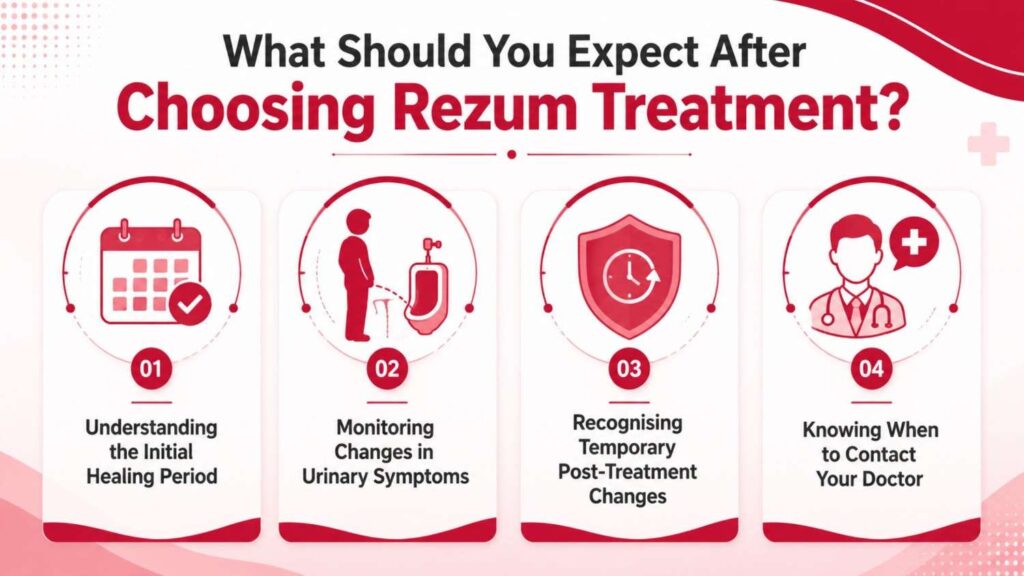
Recovery is an important part of understanding Can Rezum Treatment Help You Avoid Prostate Surgery? because a minimally invasive procedure still requires an appropriate healing period.
Patients may temporarily experience:
- Burning during urination
- Increased urinary frequency
- Urgency
- Blood in urine
- Pelvic discomfort
- Blood in semen
- Temporary difficulty passing urine
These effects do not necessarily mean that the treatment has failed. They can occur during the healing period.
A urinary catheter may be needed for a period after the procedure, particularly when temporary swelling or other factors make it difficult to empty the bladder. The exact duration varies between patients.
Patients should also understand that Rezum does not necessarily produce instant symptom relief. The treatment works gradually, so the recovery period and expected timeline should be discussed before the procedure.
Rezum vs Other BPH Treatments
There is no single BPH procedure that suits every patient. Comparing Rezum with other approaches can help explain where it may fit into treatment planning.
Rezum vs Medication
Medicines may be appropriate for men with manageable symptoms. However, some patients experience inadequate relief or medication-related side effects.
When medication does not meet treatment goals, a minimally invasive procedure such as Rezum may be discussed, depending on the patient’s circumstances.
Rezum vs TURP
TURP removes prostate tissue using an established surgical technique. Rezum uses thermal water vapour to treat targeted tissue instead of surgically resecting the prostate.
The recovery profile, symptom improvement timeline, risks, and suitability differ between the two procedures.
Rezum vs HoLEP
HoLEP uses a laser to remove the obstructing portion of the prostate. It can be particularly useful for certain patients with substantially enlarged prostates.
Rezum may be considered for appropriately selected patients seeking a minimally invasive approach. Prostate size and anatomy are important when comparing these treatment options.
Rezum vs UroLift
UroLift uses implants to retract prostate tissue and improve the urinary passage. Rezum instead uses water vapour thermal energy to treat prostate tissue.
Both are minimally invasive BPH options, but they work differently and have different selection criteria.
Can Rezum Completely Replace Prostate Surgery?
Can Rezum Treatment Help You Avoid Prostate Surgery? It may help some men avoid a conventional prostate operation, but it cannot completely replace surgery for every patient.
Some men may be suitable candidates for Rezum and may experience meaningful improvement without undergoing a traditional tissue-removing procedure. Other patients may have prostate anatomy, prostate size, urinary complications, symptom severity, or previous treatment history that makes another procedure more appropriate.
The goal should therefore not be to avoid surgery at any cost. The priority should be choosing a treatment that offers an appropriate balance between effectiveness, safety, recovery, durability, and personal treatment goals.
If significant urinary complications are present, delaying an appropriate surgical treatment simply to avoid surgery may not be the right approach. A complete urological evaluation can help determine the safest and most appropriate treatment pathway.
How to Choose the Right BPH Treatment
Can Rezum Treatment Help You Avoid Prostate Surgery? The answer should be based on an individual assessment rather than a general assumption.
Before deciding on Rezum, discuss:
- Prostate size and anatomy
- IPSS and symptom severity
- Urinary flow rate
- Post-void residual urine
- Current medications
- Previous BPH procedures
- History of urinary retention
- Sexual function priorities
- Expected recovery period
- Potential risks and complications
- Follow-up requirements
- Alternative treatment options
A good treatment plan should clearly explain why water vapor therapy is being considered, what improvement may reasonably be expected, which temporary symptoms may occur, and what alternative treatments are available. Assessment, patient selection, procedure planning, recovery guidance, and follow-up are important components of a well-planned treatment pathway.
Conclusion
Can Rezum Treatment Help You Avoid Prostate Surgery? For appropriately selected men with symptomatic BPH, Rezum can provide a minimally invasive alternative to some conventional prostate procedures. By delivering controlled water vapour into targeted prostate tissue, the treatment aims to reduce obstruction while allowing the body to gradually heal and remodel the treated area.
However, the decision should never be based on avoiding surgery alone. Prostate size, anatomy, urinary symptoms, urinary flow, residual urine, medications, previous treatment, sexual-function priorities, and overall health all need to be considered. For a broader overview of BPH treatment options, patients can also review information from the National Institute of Diabetes and Digestive and Kidney Diseases.