7 Crucial Signs You May Need Rezum Treatment: Complete Guide
Benign prostatic hyperplasia (BPH), commonly called an enlarged prostate, can gradually affect urination and everyday comfort. Understanding the signs you may need Rezum treatment can help you recognize when urinary symptoms deserve further medical evaluation. For men experiencing persistent prostate-related urinary problems in Thrissur, Rezum may be one of the minimally invasive treatment options considered after an appropriate urological assessment.
Rezum treatment uses controlled water-vapor therapy to target excess prostate tissue responsible for obstructing urine flow. It is generally considered for eligible men with BPH whose symptoms are bothersome or are not adequately controlled with conservative management or medication.
This guide explains the major signs, symptoms, contributing factors, treatment considerations, potential benefits, and practical points you should know about Rezum therapy.
1. What Are the Signs You May Need Rezum Treatment
The signs you may need Rezum treatment are usually related to lower urinary tract symptoms caused by benign prostatic hyperplasia. As the prostate enlarges, it can compress or obstruct the urethra, making normal urination increasingly difficult.
Common warning signs include:
- Frequent need to urinate
- Difficulty starting urination
- Weak or slow urine stream
- Interrupted urine flow
- Feeling that the bladder has not emptied completely
- Sudden or urgent need to urinate
- Frequent urination during the night
- Straining while urinating
- Symptoms that continue despite medication
Having one of these symptoms does not automatically mean that Rezum is required. A medical evaluation is necessary because urinary symptoms can have several possible causes.
2. Understanding Benign Prostatic Hyperplasia
Benign prostatic hyperplasia is a noncancerous enlargement of the prostate gland. The prostate surrounds part of the urethra, which carries urine from the bladder out of the body.
As prostate tissue grows, it can narrow the urethral passage and increase resistance to urinary flow. The bladder may initially compensate by contracting more strongly. Over time, however, persistent obstruction can contribute to increasingly noticeable urinary problems.
BPH becomes more common with age, particularly among middle-aged and older men. The severity of symptoms varies considerably. Some men have an enlarged prostate with few symptoms, while others experience substantial urinary difficulties.
Recognizing the signs you may need Rezum treatment involves looking at both symptom severity and how those symptoms affect everyday activities and quality of life.
3. What Causes BPH-Related Urinary Symptoms?
The exact biological mechanisms responsible for BPH are complex. Age-related changes in hormones and prostate tissue are believed to contribute to prostate growth.
Several factors may be associated with an increased likelihood of developing BPH, including:
- Increasing age
- Family history of prostate enlargement
- Hormonal changes associated with aging
- Certain metabolic conditions
- Lifestyle factors
The important distinction is that BPH is not prostate cancer. However, some urinary symptoms associated with BPH can also occur with other urinary or prostate conditions. Proper diagnosis is therefore important before considering any specific treatment.
4. Types of Urinary Symptoms Associated With BPH
The signs you may need Rezum treatment can generally be grouped into two categories: voiding symptoms and storage symptoms.
Voiding Symptoms
Voiding symptoms occur while urine is being passed.
They can include:
- Weak urinary stream
- Difficulty starting urination
- Straining
- Stop-and-start urine flow
- Dribbling after urination
- Incomplete bladder emptying
These symptoms may develop when enlarged prostate tissue obstructs the urethra.
Storage Symptoms
Storage symptoms occur while the bladder is storing urine.
They may include:
- Frequent urination
- Urinary urgency
- Waking repeatedly at night to urinate
- Difficulty delaying urination
Some men experience symptoms from both categories.
5. 7 Crucial Signs You May Need Rezum Treatment
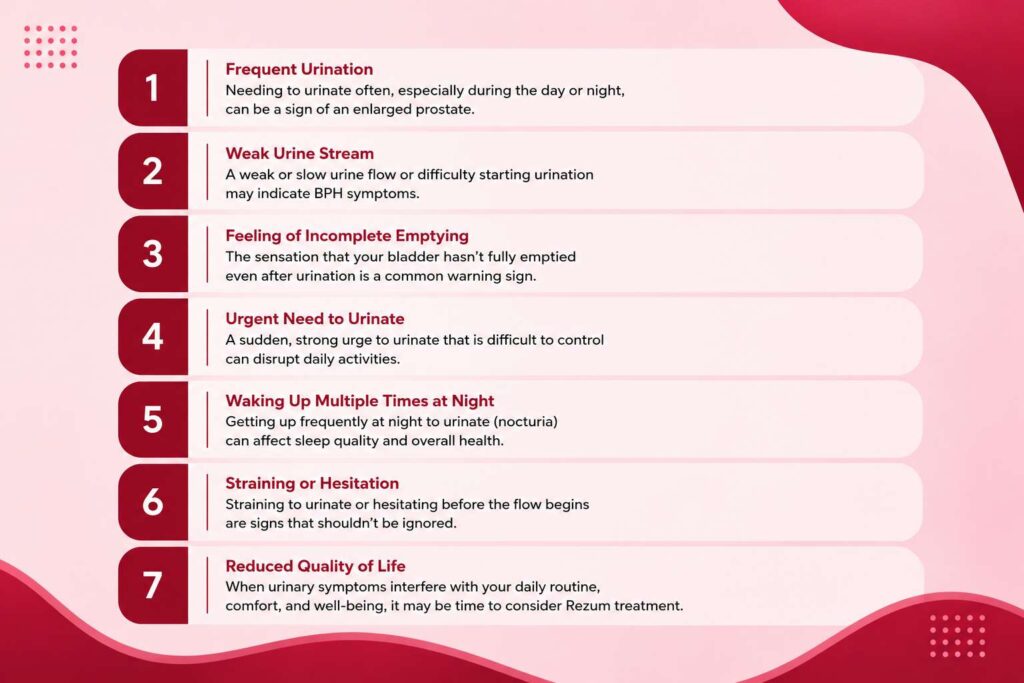
Certain persistent symptoms may indicate that it is appropriate to discuss additional BPH treatment options with a healthcare professional.
1. Frequent Urination
Needing to urinate much more frequently than before is one of the common symptoms associated with BPH.
An enlarged prostate may prevent the bladder from emptying efficiently. As a result, the bladder can fill again more quickly, creating frequent urges to urinate.
Frequent urination becomes particularly troublesome when it interferes with work, travel, social activities, or sleep.
When urinary frequency remains bothersome despite conservative measures, it may be one of the signs you may need Rezum treatment evaluation.
2. Weak or Slow Urine Stream
A healthy urinary stream is usually relatively steady. With BPH, prostate tissue can narrow the urethra and restrict urine flow.
You may notice that:
- Your urine stream has become weaker
- Urination takes longer
- The stream stops and starts
- You need to strain to maintain urine flow
A progressively weaker stream should not simply be ignored as a normal consequence of aging. It can indicate bladder outlet obstruction that requires assessment.
3. Difficulty Starting Urination
Urinary hesitancy refers to difficulty initiating urine flow even when you feel that your bladder is full.
You may stand at the toilet for several seconds before urination begins or need to strain to start the stream.
When enlarged prostate tissue restricts the urethra, the bladder has to generate greater pressure to push urine through the narrowed passage.
Persistent urinary hesitancy is another symptom that may lead to evaluation for BPH treatments such as Rezum.
4. Waking Frequently at Night to Urinate
Nocturia means waking from sleep one or more times to urinate. Although nocturia can have several causes, BPH is one possible contributor.
Repeated nighttime urination can disrupt sleep and lead to:
- Daytime tiredness
- Poor concentration
- Reduced sleep quality
- Irritability
- Difficulty maintaining normal routines
If nocturia occurs alongside weak urinary flow, urgency, hesitancy, or incomplete bladder emptying, prostate enlargement may need to be investigated.
5. Feeling That Your Bladder Never Completely Empties
Another of the important signs you may need Rezum treatment assessment is a persistent feeling of incomplete bladder emptying.
You may urinate but still feel that urine remains in your bladder.
Incomplete emptying can contribute to frequent bathroom visits because the bladder begins refilling from an already partially filled state.
Doctors may evaluate residual urine using tests that determine how much urine remains in the bladder after urination.
6. BPH Medication Is Not Providing Enough Relief
Medication is commonly used to manage bothersome BPH symptoms. Depending on the situation, medicines may help relax muscles around the prostate and bladder neck or gradually reduce prostate size.
However, medication does not provide sufficient symptom relief for everyone.
You may continue experiencing:
- Weak urine flow
- Frequent urination
- Urgency
- Nocturia
- Difficulty emptying your bladder
Some men may also experience medication-related side effects or prefer to discuss alternatives to long-term medication.
Persistent symptoms despite appropriate medical management may be among the signs you may need Rezum treatment considered as another management option.
7. Urinary Symptoms Are Affecting Your Quality of Life
The impact of BPH is not determined solely by prostate size. How much the symptoms interfere with daily life is also important.
For example, you may:
- Plan activities around access to toilets
- Avoid long journeys
- Wake several times each night
- Have difficulty sitting through meetings
- Limit social activities
- Constantly worry about urinary urgency
When urinary symptoms significantly interfere with everyday activities, further evaluation and treatment may be appropriate.
6. When Do BPH Symptoms Become Serious
Some urinary symptoms require more urgent medical attention.
Seek prompt medical care if you experience:
- Complete inability to urinate
- Blood in the urine
- Fever with urinary symptoms
- Severe lower abdominal or urinary pain
- Recurrent urinary infections
- Sudden significant worsening of urination
These symptoms should not be assumed to result from uncomplicated BPH.
A healthcare professional can determine whether symptoms are related to prostate enlargement, infection, bladder problems, urinary stones, or another condition.
7. How Rezum Treatment Works
Rezum is a minimally invasive therapy designed to reduce urinary obstruction caused by excess BPH tissue.
The procedure delivers controlled water vapor into selected areas of enlarged prostate tissue. The thermal energy stored in the vapor affects the targeted cells.
Following treatment, the body gradually absorbs the treated tissue. As the volume of obstructive prostate tissue decreases, pressure on the urethra may be reduced and urinary flow can improve.
Unlike treatments that physically remove large amounts of tissue during the procedure, Rezum relies on the body’s healing process to gradually reduce targeted prostate tissue.
Improvement therefore usually develops over time rather than immediately.
8. Who May Be Considered for Rezum
Recognizing the signs you may need Rezum treatment is only the beginning. Not every person with urinary symptoms is automatically a suitable candidate.
A clinician may consider factors such as:
- Severity of urinary symptoms
- Prostate anatomy
- Prostate size
- Degree of urinary obstruction
- Previous BPH treatments
- Current medications
- Overall medical condition
- Personal treatment preferences
Diagnostic assessment helps determine whether symptoms are actually caused by BPH and whether Rezum is an appropriate treatment option.
9. Tests Before Considering Rezum Treatment
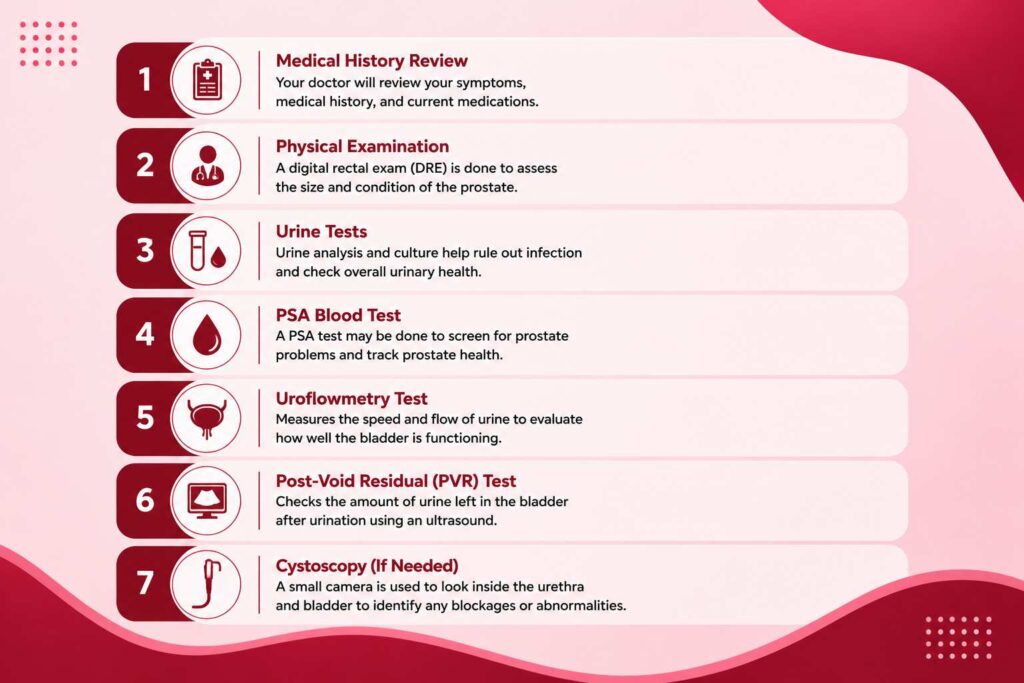
Evaluation for BPH treatment can involve several assessments depending on the patient’s symptoms and medical history.
Medical History
The clinician may ask when urinary symptoms began, how frequently they occur, whether they are worsening, and how significantly they affect daily life.
Symptom Assessment
A standardized urinary symptom questionnaire may be used to estimate symptom severity.
Physical Examination
A physical examination can provide additional information about general health and possible prostate-related problems.
Urine Testing
Urinalysis can help identify infection, blood, or other abnormalities.
Urinary Flow Testing
Uroflowmetry measures the speed and pattern of urinary flow.
Post-Void Residual Measurement
This test measures how much urine remains inside the bladder after urination.
Additional tests may be recommended depending on individual circumstances.
10. Potential Benefits of Rezum Treatment
For appropriately selected patients, Rezum offers several potential advantages.
These may include:
- Minimally invasive treatment
- Improvement in BPH-related urinary symptoms
- Improved urinary flow
- Reduced urinary obstruction
- Short procedure time in many cases
- Potential reduction in dependence on BPH medication
- Preservation of sexual function for many patients
- Avoidance of more invasive surgery in selected cases
Individual outcomes vary, and no procedure can guarantee a particular result.
Understanding both the potential benefits and limitations is essential before choosing treatment.
11. What Happens After Rezum Treatment
Recovery varies between individuals.
Temporary urinary symptoms may occur during the healing period because the treated prostate tissue can initially become swollen or irritated.
Possible short-term effects can include:
- Increased urinary frequency
- Urgency
- Mild discomfort during urination
- Blood in the urine
- Temporary difficulty urinating
Some patients may require a urinary catheter for a short period following treatment.
Symptom improvement is generally gradual as the body processes the treated prostate tissue.
Follow-up appointments help assess urinary function and recovery.
12. Tips for Managing BPH Symptoms
While undergoing evaluation or managing mild symptoms, several lifestyle measures may help reduce urinary inconvenience.
Consider:
- Limiting excessive fluids before bedtime
- Reducing caffeine, particularly later in the day
- Avoiding unnecessary delay when you need to urinate
- Emptying your bladder before going to bed
- Maintaining regular physical activity
- Discussing medications that may worsen urinary symptoms with your healthcare provider
- Keeping track of symptom changes
These measures do not remove enlarged prostate tissue and should not replace medical treatment when significant obstruction is present.
13. Why Early Evaluation of Persistent Symptoms Matters
Mild urinary symptoms can sometimes remain stable for years, while others gradually worsen.
Early assessment can establish the cause of symptoms and determine whether active treatment is necessary.
This is particularly important because urinary problems are not always caused by BPH. Similar symptoms can occur with urinary tract infections, bladder disorders, prostate inflammation, neurological conditions, and other medical problems.
Recognizing the signs you may need Rezum treatment should therefore lead to appropriate evaluation rather than self-diagnosis.
14. Rezum Treatment Versus Continuing Medication
There is no single BPH treatment that is appropriate for everyone.
Medication may be suitable when symptoms are mild or moderate and respond adequately to treatment. Rezum may become an option when symptoms remain bothersome, medication is ineffective or poorly tolerated, or an eligible patient prefers a minimally invasive intervention.
Treatment decisions should consider:
- Symptom severity
- Treatment goals
- Prostate characteristics
- Medication response
- Possible side effects
- Recovery expectations
- Potential procedural risks
A personalized assessment is essential when comparing treatment approaches.
Conclusion
Understanding the signs you may need Rezum treatment can help you decide when persistent BPH symptoms deserve further evaluation. Frequent urination, weak urine flow, difficulty starting urination, nocturia, incomplete bladder emptying, poor response to medication, and disruption to everyday life are important symptoms to discuss with a healthcare professional.
Rezum can be a minimally invasive treatment option for appropriately selected men with symptomatic BPH, but suitability depends on prostate characteristics, symptom severity, diagnostic findings, and overall health. If persistent enlarged-prostate symptoms are affecting daily comfort or urinary function in Thrissur, a proper urological assessment can help determine the most appropriate management approach. For reliable information about benign prostatic hyperplasia (BPH), its symptoms, diagnosis, and treatment options, visit the National Institute of Diabetes and Digestive and Kidney Diseases (NIDDK) guide to enlarged prostate.
Frequently Asked Question
Persistent weak urinary flow, frequent urination, difficulty starting urination, nocturia, urgency, incomplete bladder emptying, and symptoms that remain bothersome despite medication may justify discussing additional BPH treatment options.
Not necessarily. Frequent urination has many potential causes. A medical assessment is required to determine whether prostate enlargement is responsible and whether Rezum is appropriate.
Yes. An enlarged prostate can compress the urethra and reduce urinary flow. However, other conditions can also cause a weak stream.
Yes. Nocturia is commonly associated with lower urinary tract symptoms, including BPH. It can also result from other medical or lifestyle factors.
Persistent symptoms despite medication can be a reason to discuss minimally invasive or surgical treatment options. Suitability for Rezum depends on individual clinical factors.
Improvement is generally gradual because the body needs time to absorb treated prostate tissue. The timeline can differ between patients.
Rezum is generally categorized as a minimally invasive BPH treatment rather than conventional major prostate surgery.
When a weak stream is caused by eligible BPH-related prostate obstruction, reducing obstructive tissue may improve urinary flow. Results vary among individuals.
No. Some men have mild symptoms that can be monitored or managed conservatively. Treatment is usually based on symptom severity, complications, clinical findings, and quality-of-life impact.
Symptoms may be considered increasingly troublesome when they frequently interrupt sleep, restrict daily activities, cause substantial difficulty urinating, or lead to complications. Standardized symptom questionnaires can also help clinicians assess severity.
JR Nathan Urology Center – Our Urology Specialists