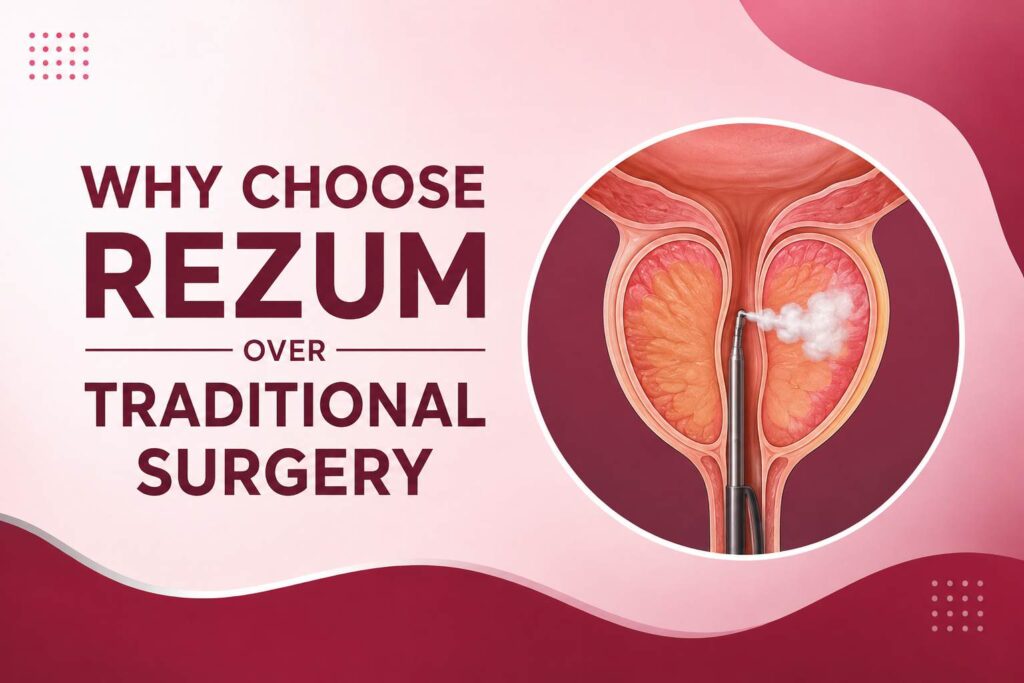
7 Strong Reasons: Why Choose Rezum Over Traditional Surgery
For men dealing with urinary problems caused by benign prostatic hyperplasia (BPH), choosing the right treatment can significantly affect recovery, comfort, and quality of life. Why choose Rezum over traditional surgery is therefore an important question for patients exploring modern prostate treatment options. In Thrissur, increasing awareness of minimally invasive BPH treatments has encouraged patients to learn about alternatives to conventional prostate surgery. Rezum uses controlled water-vapor therapy to target excess prostate tissue while generally requiring less invasive intervention than traditional surgical procedures.
Understanding how Rezum works, its benefits, possible limitations, recovery process, and how it compares with conventional surgery can help patients have a more informed discussion with their urologist.
1. What Is Rezum Treatment
Rezum is a minimally invasive treatment designed primarily for urinary symptoms associated with benign prostatic hyperplasia. BPH is a noncancerous enlargement of the prostate gland that becomes increasingly common as men age.
As the prostate enlarges, it can compress or obstruct the urethra. This may interfere with normal urine flow and lead to symptoms such as difficulty starting urination, weak urine flow, frequent urination, and waking several times during the night to urinate.
Rezum treatment uses sterile water vapor, or steam, to deliver controlled thermal energy into selected areas of enlarged prostate tissue. The energy damages the targeted cells, and the body gradually absorbs the treated tissue.
As the volume of obstructing tissue decreases, pressure on the urethra can be reduced and urinary flow may improve.
When considering why choose Rezum over traditional surgery, the minimally invasive nature of the procedure is one of its most significant characteristics.
2. Why Choose Rezum Over Traditional Surgery for BPH
Traditional prostate surgery can be highly effective and remains necessary or preferable for certain patients. However, surgery may involve anesthesia, removal or destruction of prostate tissue, a hospital stay in some cases, and a longer recovery period.
Rezum approaches BPH differently.
Instead of surgically cutting away enlarged prostate tissue, controlled steam is delivered into specific treatment areas. The body then gradually removes the affected cells.
For appropriately selected patients, reasons to consider why choose Rezum over traditional surgery can include reduced invasiveness, relatively short procedure time, the potential for faster return to routine activities, and a lower risk of certain sexual side effects compared with some surgical options.
The most appropriate treatment still depends on prostate anatomy, prostate size, symptom severity, medical history, complications, and individual treatment priorities.
3. How Does Rezum Water Vapor Therapy Work
The science behind Rezum is based on convective water-vapor energy.
During treatment, a specialized device is introduced through the urethra. Small, controlled amounts of sterile water vapor are delivered into selected regions of enlarged prostate tissue.
When the vapor comes into contact with the targeted tissue, it condenses and releases stored thermal energy. This damages the unwanted cells in the treatment zone.
Over the following weeks and months, the body’s natural healing processes gradually absorb the treated cells. The prostate tissue causing the obstruction can therefore shrink, potentially creating more space for urine to pass through the urethra.
This gradual process is important when understanding why choose Rezum over traditional surgery. Rezum does not normally provide the immediate tissue removal associated with procedures that physically resect prostate tissue. Instead, improvement develops as the treated tissue shrinks.
4. Causes of Benign Prostatic Hyperplasia
The exact cause of BPH is not completely understood. Age-related hormonal and cellular changes are believed to play an important role.
The prostate naturally undergoes changes throughout a man’s life. In some men, prostate cells continue growing enough to cause significant enlargement.
Factors associated with an increased likelihood of BPH include:
- Increasing age
- Family history of prostate enlargement
- Hormonal changes associated with aging
- Obesity and metabolic health factors
- Certain cardiovascular and lifestyle factors
- Changes in prostate cell growth and regulation
Having an enlarged prostate does not automatically mean treatment is necessary. Treatment is generally considered when symptoms become bothersome, interfere with daily life, or contribute to complications.
5. Common Symptoms of an Enlarged Prostate
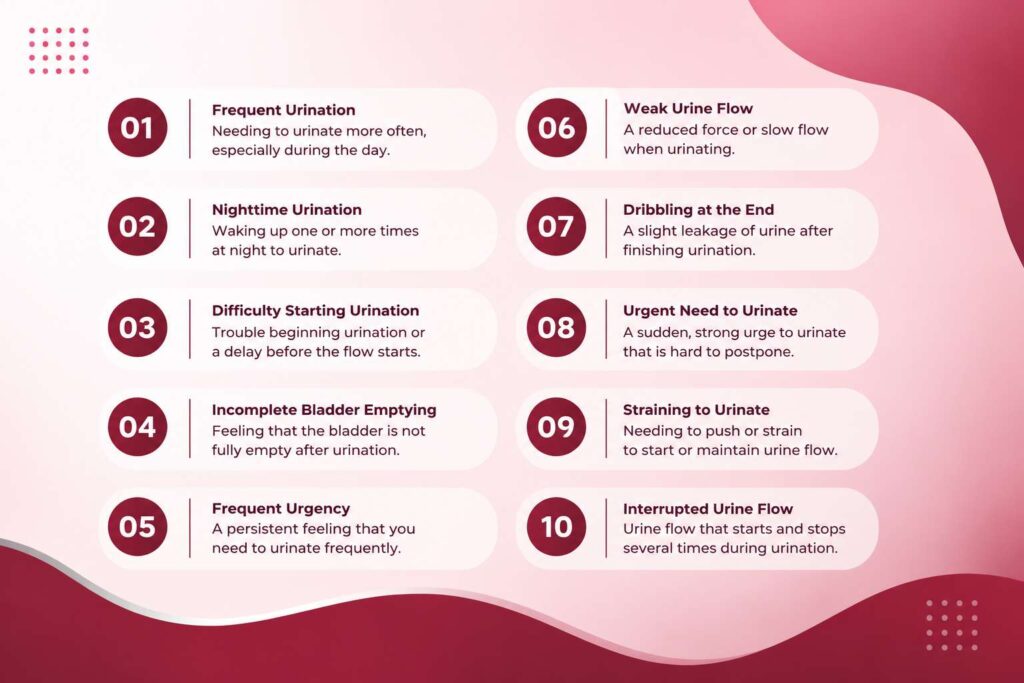
BPH can affect men differently. Some may have a considerably enlarged prostate with relatively mild symptoms, while others can experience significant urinary difficulties.
Typical lower urinary tract symptoms include difficulty starting urination, weak or interrupted urine flow, straining to urinate, a sensation that the bladder has not completely emptied, frequent urination, urgency, and increased nighttime urination.
More significant obstruction may occasionally contribute to urinary retention, recurrent urinary tract infections, bladder stones, or effects on bladder and kidney function.
Symptoms should be medically evaluated because urinary problems are not always caused by BPH. Other urinary or prostate conditions can produce similar symptoms.
6. Why Choose Rezum Over Traditional Surgery for Faster Recovery?
Recovery is one of the main considerations when comparing minimally invasive therapy with conventional surgery.
Traditional surgical procedures may require more recovery because prostate tissue is mechanically or surgically removed. Depending on the procedure and individual circumstances, patients may need to temporarily limit work, exercise, lifting, and other activities.
Rezum usually causes less direct tissue disruption.
Many patients can return to routine activities relatively quickly, although individual recovery varies. Temporary urinary discomfort, urgency, frequency, blood in the urine or semen, and pelvic discomfort can occur after treatment.
A urinary catheter may also be required temporarily, particularly while swelling settles.
Therefore, when patients ask why choose Rezum over traditional surgery, the possibility of a shorter or easier recovery period can be an important consideration.
7. Reduced Surgical Invasiveness
One of the defining benefits of Rezum is that it is minimally invasive.
Traditional BPH surgery can involve cutting, vaporizing, enucleating, or otherwise removing prostate tissue. These procedures are effective and can be particularly useful for significant obstruction or larger prostates.
Rezum instead delivers steam energy through the urethra without external surgical incisions.
This difference helps explain why choose Rezum over traditional surgery for appropriately selected patients who want a treatment option that sits between medication and more extensive surgical intervention.
Less invasive, however, does not mean completely risk-free. Every medical procedure has potential complications, and patients should understand both benefits and limitations before deciding.
8. Preservation of Sexual Function
Sexual function can be an important factor when selecting BPH treatment.
Certain traditional surgical treatments have a significant possibility of causing changes in ejaculation. Retrograde ejaculation, sometimes called dry orgasm, occurs when semen enters the bladder rather than exiting through the penis.
Rezum has attracted attention partly because ejaculatory and erectile functions are generally less likely to be affected than with some tissue-removing surgical procedures.
This does not mean sexual side effects are impossible.
Patients who consider preservation of sexual function particularly important should discuss their priorities before treatment. Individual risk can vary according to anatomy, existing sexual function, medications, age, health conditions, and treatment technique.
For these patients, sexual-function considerations may be another answer to why choose Rezum over traditional surgery.
9. Short Procedure Time
Another potential advantage of Rezum is its relatively short treatment time.
The exact duration depends on the number of treatment areas required and individual prostate anatomy. Because the treatment is minimally invasive and does not require surgical removal of large amounts of prostate tissue, the procedural component can often be completed relatively quickly.
Traditional surgical procedures may require more extensive preparation, anesthesia, operating-room resources, and postoperative observation.
A shorter procedure can be particularly attractive to men seeking an efficient treatment with limited disruption to everyday life.
However, procedure time alone should never determine treatment selection. Effectiveness, anatomy, symptoms, medical conditions, risks, and long-term treatment goals are more important considerations.
10. Potential to Reduce Dependence on BPH Medication
Medications are often the first treatment used for bothersome BPH symptoms.
Alpha blockers can relax muscles around the prostate and bladder neck, while 5-alpha-reductase inhibitors can gradually reduce prostate size in selected patients. Some men achieve satisfactory symptom control with medication.
Others experience inadequate improvement, medication-related side effects, or dislike taking medication indefinitely.
In appropriate patients, Rezum may provide an alternative when medication is ineffective, poorly tolerated, or no longer preferred.
This is another practical reason behind the question why choose Rezum over traditional surgery. Patients may be able to move beyond medication without immediately proceeding to more invasive surgical treatment.
Medication should not be discontinued without guidance from the treating clinician.
11. Gradual and Lasting Symptom Improvement
Rezum does not necessarily produce maximum improvement immediately.
Following treatment, temporary swelling can initially make urinary symptoms feel unchanged or occasionally worse. As inflammation settles and treated prostate tissue is gradually absorbed, urinary symptoms may begin improving.
Some men notice improvement within several weeks, while further improvement can continue over the following months.
Potential improvements may include stronger urine flow, less straining, reduced urgency, fewer nighttime bathroom visits, and a greater feeling of complete bladder emptying.
Clinical outcomes vary, and some patients may eventually require additional BPH treatment.
Understanding this timeline is important when considering why choose Rezum over traditional surgery, because Rezum prioritizes minimally invasive treatment rather than immediate surgical removal of obstructing tissue.
12. Rezum vs Traditional Prostate Surgery
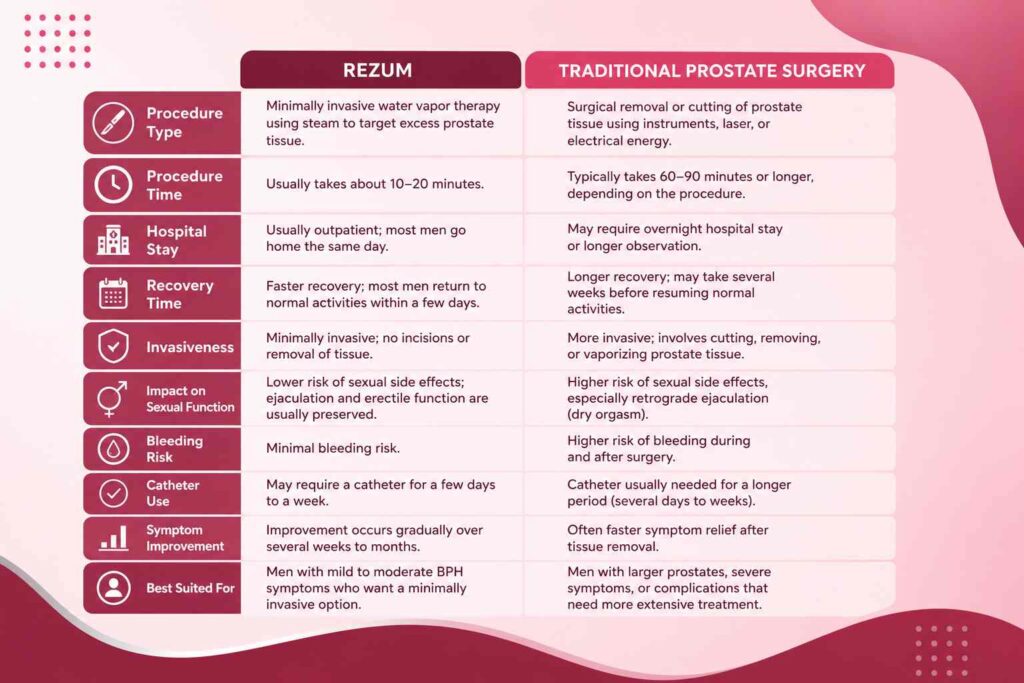
Both Rezum and traditional surgery aim to reduce urinary obstruction caused by enlarged prostate tissue, but they accomplish this differently.
Rezum uses controlled water-vapor energy and relies on the body’s natural healing response to reduce targeted tissue over time.
Traditional surgical treatments physically remove, vaporize, resect, or enucleate obstructing prostate tissue. Depending on the technique, this can provide substantial and sometimes faster relief, especially in patients with significant obstruction.
Traditional procedures may therefore remain preferable for men with very large prostates, severe urinary retention, bladder stones, recurrent complications, or anatomical features that make minimally invasive therapy less suitable.
The question is not simply whether one procedure is universally better. Why choose Rezum over traditional surgery depends largely on whether its benefits match the patient’s clinical situation and priorities.
13. Who May Be a Suitable Candidate for Rezum
Rezum is primarily intended for men with bothersome lower urinary tract symptoms associated with BPH.
A potential candidate may have persistent urinary symptoms despite lifestyle changes or medication, difficulty tolerating BPH medicines, a preference for minimally invasive treatment, or concerns about sexual side effects associated with certain surgical procedures.
Before recommending treatment, a urologist may assess symptom severity, prostate size and anatomy, urine flow, bladder emptying, medications, medical history, and other relevant factors.
Additional testing may be required to exclude conditions that can mimic BPH symptoms.
Not every patient with an enlarged prostate is a suitable candidate. Careful assessment is essential when deciding why choose Rezum over traditional surgery for an individual patient.
14. What Happens Before Rezum Treatment?
The evaluation before Rezum treatment helps confirm that urinary symptoms are related to BPH and that the procedure is appropriate.
A medical assessment may include discussion of urinary symptoms, previous treatments, medications, general health conditions, and treatment expectations.
Depending on the patient’s situation, evaluation may involve urine testing, assessment of urinary flow, measurement of residual urine in the bladder, prostate examination, imaging, prostate-specific antigen testing, or other investigations.
The exact testing process varies.
Patients taking blood-thinning medicines or other medications that can affect procedures should discuss them with their healthcare provider. Medication changes should only be made according to medical instructions.
15. What to Expect After Rezum Treatment
Recovery varies from patient to patient.
Temporary irritation of the urinary tract is common because the prostate has been treated with thermal energy. Frequency, urgency, mild burning during urination, blood in the urine, or pelvic discomfort may occur during early recovery.
A temporary catheter may be needed because treatment-related prostate swelling can make urination difficult initially.
Patients are generally advised to follow their healthcare provider’s instructions regarding physical activity, hydration, medications, catheter care, sexual activity, and follow-up.
The key point is that Rezum improvement is progressive. Patients should not expect the full benefit immediately after treatment.
16. Benefits of Choosing Rezum
The potential benefits help clarify why choose Rezum over traditional surgery for selected BPH patients.
Rezum offers a minimally invasive approach without external surgical incisions. It may involve a relatively short procedure and recovery period compared with more invasive prostate surgery.
Another significant consideration is its lower likelihood of causing certain sexual side effects compared with some conventional surgical approaches.
The treatment may also help reduce bothersome urinary symptoms and provide an option for patients who no longer want to rely entirely on medication.
These advantages must always be considered alongside individual anatomy, symptom severity, treatment expectations, and the possibility that another procedure could provide better results for a particular patient.
17. Possible Risks and Side Effects
Although Rezum is minimally invasive, side effects can still occur.
Temporary symptoms may include painful or burning urination, increased urinary frequency, urgency, blood in the urine, blood in semen, pelvic discomfort, difficulty urinating, or urinary retention.
Some patients may require temporary catheterization.
Less common complications can occur, and symptom improvement varies between individuals. There is also a possibility that symptoms may persist or that additional treatment may eventually be necessary.
Understanding both advantages and potential risks provides a more balanced answer to why choose Rezum over traditional surgery.
18. Tips for Recovery After Rezum
Following post-treatment instructions can support a smoother recovery.
Patients should maintain appropriate hydration unless they have been given fluid restrictions for another medical condition. Strenuous exercise and heavy lifting may need to be avoided temporarily.
Any prescribed medication should be taken according to instructions, and catheter-care recommendations should be followed carefully if a catheter is required.
Patients should also attend scheduled follow-up appointments so urinary symptoms and recovery can be assessed.
Severe pain, inability to urinate, heavy bleeding, fever, or other concerning symptoms should be reported promptly to the treating medical team.
19. When Traditional Surgery May Be More Appropriate
Rezum is not intended to replace every form of prostate surgery.
Some patients have prostate enlargement or complications that require a more aggressive approach. Traditional or laser-based surgical treatments may provide greater tissue removal and stronger urinary-flow improvement in certain situations.
Surgery may be considered when urinary obstruction is severe, repeated urinary retention occurs, bladder stones develop, recurrent infections are present, kidney or bladder function is threatened, or prostate anatomy is unsuitable for Rezum.
This distinction is essential when discussing why choose Rezum over traditional surgery. The best treatment is the one that provides an appropriate balance of effectiveness, safety, durability, and quality-of-life outcomes for the individual patient.
Conclusion
Understanding why choose Rezum over traditional surgery requires comparing more than procedure time alone. Rezum provides a minimally invasive method of treating BPH using controlled water vapor to reduce obstructing prostate tissue gradually. Potential advantages include reduced surgical invasiveness, a relatively convenient recovery process, symptom improvement, and a lower likelihood of certain sexual side effects compared with some conventional surgical treatments.
Traditional prostate surgery remains important and may provide better results for patients with severe obstruction, significant complications, very large prostates, or anatomy unsuitable for minimally invasive treatment.
For patients considering BPH treatment in Thrissur, a complete prostate and urinary assessment can help determine whether Rezum, medication, laser treatment, conventional surgery, or another approach is most appropriate. According to the National Institute of Diabetes and Digestive and Kidney Diseases (NIDDK), BPH can be treated with medicines, minimally invasive procedures, or surgery depending on the patient’s condition.
Frequently Asked Question
Why choose Rezum over traditional surgery often comes down to its minimally invasive approach, relatively short treatment process, recovery profile, and lower likelihood of certain sexual side effects compared with some surgical procedures.
Rezum is generally described as a minimally invasive BPH procedure rather than conventional tissue-removing prostate surgery. It uses water-vapor energy delivered through the urethra to treat enlarged prostate tissue.
Rezum does not mechanically cut out prostate tissue. Steam energy damages selected excess tissue, which is gradually absorbed by the body.
Improvement is gradual. Some patients notice changes within several weeks, while urinary symptoms can continue improving over the following months as treated tissue shrinks.
Comfort levels vary. Appropriate pain-control or anesthesia techniques may be used during treatment. Temporary burning, urinary discomfort, urgency, or pelvic discomfort can occur afterward.
Some patients require a temporary urinary catheter because prostate swelling after treatment can temporarily interfere with urination. Duration depends on individual circumstances.
By reducing enlarged prostate tissue that is obstructing the urethra, Rezum may improve urine flow and reduce other BPH-related urinary symptoms in appropriately selected patients.
One reason patients investigate why choose Rezum over traditional surgery is the potential for preservation of erectile and ejaculatory function compared with certain surgical treatments. Individual outcomes can still vary.
Some patients may be able to reduce or discontinue BPH medication after successful treatment, but medication decisions should always be made with the treating healthcare professional.
Rezum can provide lasting symptom improvement for many patients, but BPH is associated with ongoing age-related prostate changes. Some men may eventually require additional treatment.
JR Nathan Urology Center – Our Urology Specialists