9 Powerful Benefits of Rezum Treatment for Better BPH Relief
Benign prostatic hyperplasia (BPH), commonly called an enlarged prostate, can make everyday activities difficult due to frequent urination, weak urine flow, urgency, and interrupted sleep. For men seeking a minimally invasive approach, understanding the benefits of Rezum treatment can help when discussing available options with a urologist. In Thrissur, Rezum water vapor therapy is one of the treatment approaches that may be considered for eligible men with bothersome BPH symptoms.
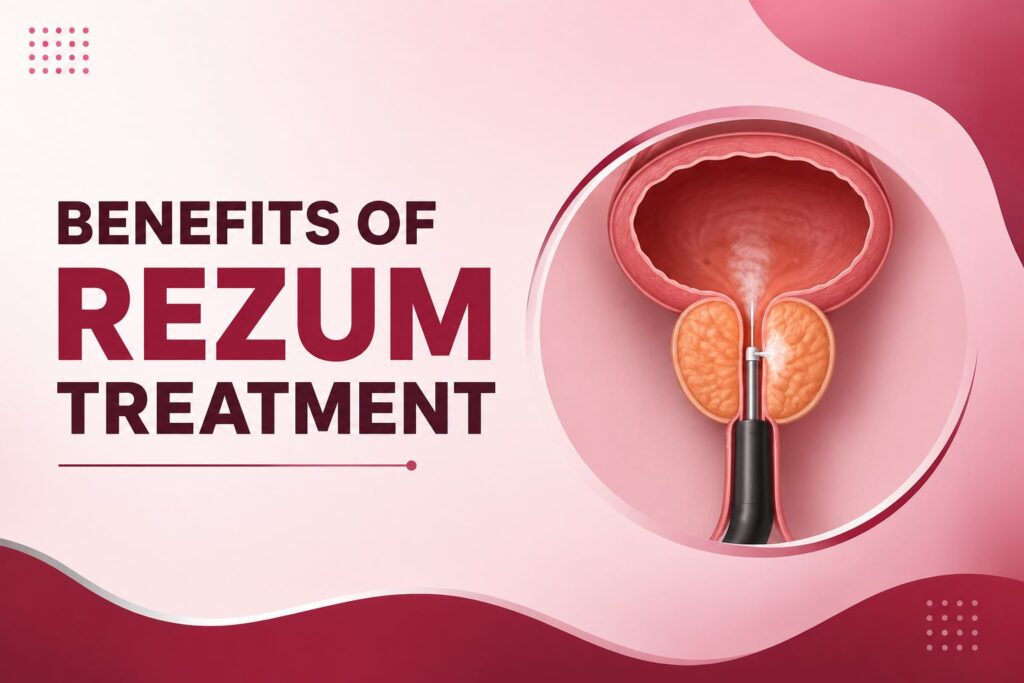
Rezum uses controlled water vapor to target excess prostate tissue contributing to urinary obstruction. Over time, the body naturally absorbs the treated tissue, helping open the urethral passage and improve urine flow.
This page explains the benefits of Rezum treatment, how the procedure works, which symptoms it addresses, what recovery may involve, and what patients can generally expect after treatment.
1. What Is Rezum Treatment
Rezum is a minimally invasive therapy designed to treat urinary symptoms caused by BPH. Instead of surgically cutting away large amounts of prostate tissue, the procedure delivers small amounts of sterile water vapor into selected areas of enlarged prostate tissue.
The thermal energy carried by the vapor causes targeted cells to die. The body gradually removes this treated tissue during the following weeks and months. As the prostate tissue shrinks, pressure around the urethra can decrease.
One of the important benefits of Rezum treatment is that it provides another option between long-term medication and more invasive surgical procedures for appropriately selected patients.
Rezum may help improve symptoms such as:
- Frequent urination
- Difficulty starting urination
- Weak or interrupted urine stream
- Urinary urgency
- Feeling that the bladder has not completely emptied
- Frequent nighttime urination
- Straining during urination
- Stop-and-start urine flow
Not every patient with urinary symptoms is suitable for Rezum, so proper medical assessment remains important.
2. What Causes BPH and Urinary Problems
The prostate is a gland located below the bladder and surrounding part of the urethra. It commonly increases in size as men get older. This enlargement is known as benign prostatic hyperplasia.
BPH is non-cancerous, but an enlarged prostate can compress or obstruct the urethra.
As obstruction increases, the bladder has to work harder to push urine through the narrowed passage. This can contribute to bothersome lower urinary tract symptoms.
Common BPH Symptoms
BPH symptoms can be divided broadly into storage and voiding symptoms.
Storage symptoms may include:
- Increased urinary frequency
- Sudden urinary urgency
- Waking several times at night to urinate
- Difficulty delaying urination
Voiding symptoms can include:
- Weak urine stream
- Hesitancy before urine begins
- Straining
- Intermittent urine flow
- Incomplete bladder emptying
The severity of symptoms does not always correspond directly with prostate size. Medical evaluation helps determine whether BPH or another condition is responsible.
3. 9 Major Benefits of Rezum Treatment
The benefits of Rezum treatment are primarily associated with its minimally invasive approach and its ability to reduce BPH-related urinary obstruction without conventional tissue-removing surgery.
Here are nine potential advantages.
1. Minimally Invasive Treatment
One of the primary benefits of Rezum treatment is its minimally invasive nature.
The treatment is performed through the urethra, meaning external surgical incisions are generally not required. Controlled water vapor is delivered directly into selected prostate tissue.
For eligible patients, this approach can reduce the physical impact associated with more invasive procedures.
2. Improvement in BPH Symptoms
The main objective of Rezum therapy is to improve lower urinary tract symptoms caused by prostate enlargement.
As treated prostate tissue is gradually absorbed, pressure on the urethra can decrease.
Patients may experience improvements in:
- Urinary flow
- Frequency
- Urgency
- Hesitancy
- Nighttime urination
- Bladder emptying
Improvement is generally gradual rather than immediate because the body needs time to process the treated tissue.
3. Short Procedure Time
Another of the practical benefits of Rezum treatment is that the procedure itself is generally relatively short.
The exact duration depends on prostate anatomy, treatment requirements, and individual circumstances.
A shorter procedure may be particularly attractive to patients who want to explore a minimally invasive alternative to traditional prostate surgery.
4. Usually Does Not Require Major Surgery
Traditional prostate surgery may involve cutting, removing, vaporizing, or enucleating prostate tissue. Rezum works differently.
Water vapor is injected into targeted areas rather than mechanically removing large quantities of tissue during the procedure.
This distinction is one of the significant benefits of Rezum treatment for appropriately selected men who may not require or prefer conventional surgery.
5. Relatively Short Recovery Period
Recovery varies between patients, but Rezum is generally associated with less procedural trauma than major prostate surgery.
Patients should still expect a recovery period. Temporary urinary symptoms can occur while the prostate responds to treatment.
These may include:
- Increased urinary frequency
- Urgency
- Mild discomfort during urination
- Temporary blood in the urine
- Pelvic discomfort
A urinary catheter may also be required temporarily in some cases.
Following the treating clinician’s recovery instructions is important.
6. Reduced Dependence on BPH Medication
BPH medications can help control symptoms, but they may need to be taken continuously to maintain their effects.
Some men also experience medication-related adverse effects.
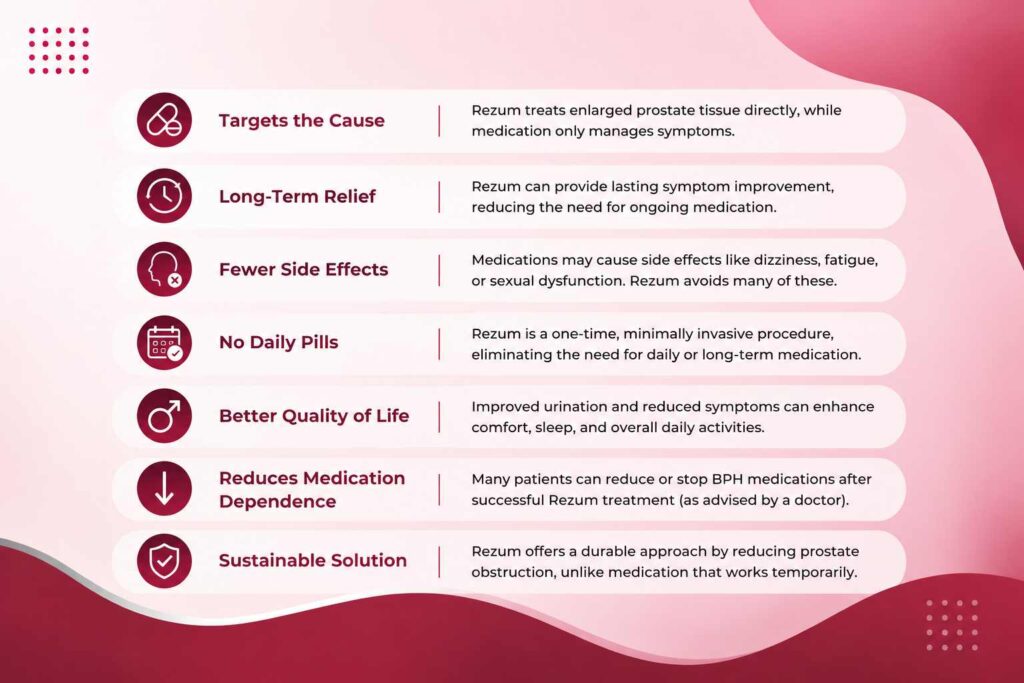
One potential reason patients consider procedural treatment is the possibility of reducing their dependence on long-term BPH medication. Whether medication can be reduced or stopped after Rezum should be decided by the treating clinician.
Patients should never discontinue prescribed BPH medication without medical advice.
7. Sexual Function May Be Better Preserved
Sexual side effects are an important consideration when comparing treatments for enlarged prostate symptoms.
One of the commonly discussed benefits of Rezum treatment is its potential to preserve sexual function, including erectile and ejaculatory function, compared with some surgical approaches.
However, no medical procedure can guarantee the absence of sexual side effects.
Individual risks depend on several factors, including prostate anatomy, existing sexual function, medical history, and the treatment performed.
Patients concerned about ejaculation, erections, fertility, or other sexual effects should discuss these issues before treatment.
8. Gradual and Sustained Symptom Improvement
Rezum is not designed to provide instant improvement immediately after treatment.
Initially, inflammation and swelling can temporarily make urinary symptoms more noticeable. As healing progresses and the treated prostate tissue is absorbed, urinary function may gradually improve.
Some patients begin noticing changes within several weeks, while improvement can continue over the following months.
This gradual reduction in obstructive tissue contributes to the longer-term benefits of Rezum treatment.
9. Can Improve Everyday Quality of Life
BPH symptoms can affect much more than urination.
Frequent bathroom visits can interrupt meetings, travel, exercise, social activities, and sleep. Nocturia can be particularly disruptive because repeatedly waking to urinate may reduce sleep quality.
When urinary symptoms improve after successful treatment, patients may find everyday activities easier to manage.
Improved symptom control may mean:
- Fewer interruptions during daily activities
- Less concern about locating toilets
- Better sleep due to reduced nighttime urination
- Improved comfort while travelling
- Less time spent managing urinary symptoms
These quality-of-life improvements can be among the most meaningful benefits of Rezum treatment for men with bothersome BPH.
4. Benefits of Rezum Treatment Compared With BPH Medication
Medication is often used as an initial treatment for BPH, particularly when symptoms are mild or moderate.
Common medication categories include alpha blockers and 5-alpha reductase inhibitors. Each works differently and may have specific benefits and side effects.
Medication can be effective, but some men experience inadequate symptom control, unwanted side effects, or prefer not to take medication indefinitely.
The benefits of Rezum treatment compared with medication may include treating obstructive prostate tissue directly rather than only managing symptoms pharmacologically.
However, Rezum does not automatically replace medication for every patient. Treatment decisions should consider symptom severity, prostate anatomy, general health, medication response, and personal preferences.
5. Rezum vs Traditional Prostate Surgery
There are several procedures available for treating BPH. Traditional and laser-based surgical techniques can be highly effective, particularly for significant obstruction or certain prostate anatomies.
Rezum differs because it uses water vapor thermal therapy instead of immediately removing large volumes of tissue.
Potential benefits of Rezum treatment compared with more invasive surgery can include:
- No external incision
- Minimally invasive technique
- Short procedural duration
- Potentially shorter recovery
- Lower procedural burden for suitable patients
- Potential preservation of sexual function
This does not mean Rezum is superior for every enlarged prostate.
Some patients may receive greater benefit from other treatments, particularly when there is severe obstruction, specific anatomical considerations, urinary complications, or a prostate size outside the usual treatment parameters.
6. Who May Benefit From Rezum Treatment
The benefits of Rezum treatment are most relevant to appropriately selected patients with lower urinary tract symptoms caused by BPH.
A clinician may consider several factors before recommending treatment.
These include:
- Age
- Severity of urinary symptoms
- Prostate size
- Prostate anatomy
- Urinary flow
- Amount of urine remaining after urination
- Previous BPH treatments
- Current medications
- General medical condition
- Patient treatment preferences
Diagnostic testing may be required to determine whether symptoms are actually caused by prostate enlargement.
7. What Happens During Rezum Treatment
Understanding the procedure can make the benefits of Rezum treatment easier to evaluate.
During Rezum therapy, a specialized instrument is passed through the urethra. The system delivers controlled water vapor into selected areas of enlarged prostate tissue.
When the vapor contacts the tissue, it releases stored thermal energy.
This damages the targeted cells while the treatment is designed to remain localized. The body subsequently begins a natural healing response and gradually absorbs the treated tissue.
As the tissue volume decreases, the urethral channel can become less restricted.
No external incision is generally required.
8. Recovery After Rezum Therapy
Recovery is an important part of treatment.
Patients should not assume that urinary symptoms will disappear immediately after the procedure. Temporary inflammation can cause urinary symptoms during the early recovery period.
A catheter may be necessary for a short period depending on swelling, prostate anatomy, urinary retention risk, and the clinician’s assessment.
Tips During Recovery
Patients should follow their individual medical instructions, which may include guidance about:
- Drinking adequate fluids
- Avoiding strenuous physical activity temporarily
- Taking prescribed medication correctly
- Managing temporary urinary discomfort
- Caring for a catheter if one is required
- Attending scheduled follow-up appointments
Contact the treating medical team promptly if severe pain, inability to urinate, heavy bleeding, fever, or other concerning symptoms develop.
9. When Can Results Be Expected
The benefits of Rezum treatment generally develop progressively.
Because the body must absorb treated prostate tissue, results take time. Some patients may notice improvement within several weeks, with further improvement occurring over the following months.
The exact timeline varies.
Factors affecting recovery and results can include:
- Prostate size and anatomy
- Severity of obstruction
- Baseline urinary symptoms
- Bladder function
- General health
- Healing response
Patients should follow the recommended follow-up schedule so their urinary function and symptom improvement can be assessed.
10. Possible Side Effects and Limitations
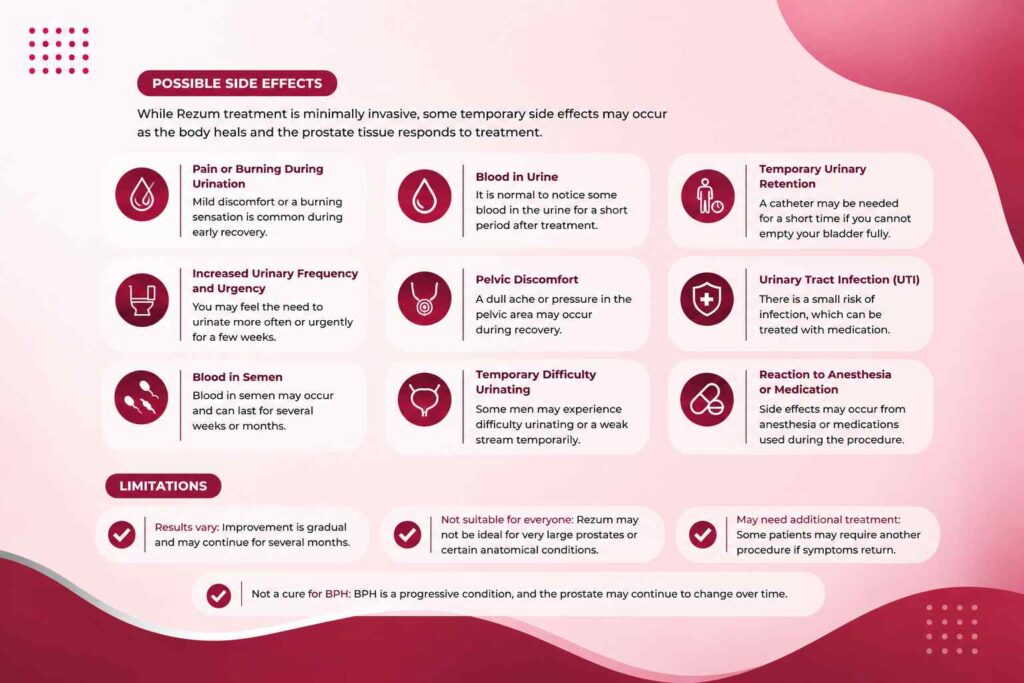
A balanced understanding of the benefits of Rezum treatment should also include its possible risks and limitations.
Temporary side effects may include:
- Pain or burning during urination
- Urinary frequency
- Urgency
- Blood in the urine
- Blood in semen
- Pelvic discomfort
- Difficulty urinating
- Temporary urinary retention
A catheter may occasionally be required longer than expected.
Less common complications can also occur, and some patients may require additional treatment if symptoms do not improve adequately or return later.
Discussing expected benefits, potential complications, alternatives, and individual suitability with a qualified clinician is essential before choosing treatment.
11. Why Patient Selection Matters
Not every man with an enlarged prostate will experience the same benefits of Rezum treatment.
BPH symptoms can overlap with those caused by urinary infections, bladder disorders, urethral narrowing, neurological conditions, prostate cancer, and other medical problems.
A medical evaluation may involve symptom assessment, physical examination, urine testing, prostate evaluation, urinary flow testing, post-void residual measurement, and other investigations when appropriate.
Accurate diagnosis helps determine whether reducing enlarged prostate tissue is likely to improve the patient’s symptoms.
Conclusion
The benefits of Rezum treatment make it a valuable minimally invasive option for eligible men experiencing urinary symptoms caused by benign prostatic hyperplasia (BPH). By using controlled water vapor to target excess prostate tissue, Rezum can help improve urine flow, reduce urgency and frequency, and decrease nighttime urination without requiring traditional prostate surgery.
Other important benefits of Rezum treatment include a relatively short procedure, gradual symptom improvement, manageable recovery for many patients, and the potential to preserve sexual function. Individual results can vary, so proper evaluation is essential to determine whether Rezum is suitable. For men considering BPH treatment in Thrissur, discussing the available options, potential risks, recovery expectations, and likely outcomes with a qualified healthcare professional can support an informed treatment decision.
Frequently Asked Questions
The main benefits of Rezum treatment include its minimally invasive approach, improvement of BPH-related urinary symptoms, relatively short procedure time, potential reduction in medication dependence, and potential preservation of sexual function.
Rezum is generally classified as a minimally invasive treatment for BPH rather than major prostate surgery. Water vapor is delivered through the urethra to targeted prostate tissue, so external incisions are not normally required.
It can improve urinary flow in appropriately selected patients. As treated prostate tissue is gradually absorbed, pressure around the urethra can decrease, allowing urine to pass more easily.
Results are usually gradual. Some men notice symptom improvement within several weeks, while additional improvement can occur over the following months as treated tissue is absorbed.
Some patients require a temporary urinary catheter following the procedure. The duration depends on factors such as prostate anatomy, swelling, urinary function, and the treating clinician’s assessment.
If nighttime urination is primarily related to BPH obstruction, improving the obstruction may help. However, nocturia can have several other causes, so treatment does not guarantee that nighttime urination will completely disappear.
Some patients may eventually reduce or discontinue BPH medications following successful treatment. This decision should only be made with the clinician managing the patient’s treatment.
One of the potential benefits of Rezum treatment is preservation of sexual function for many patients. Nevertheless, individual outcomes vary, and sexual side effects remain possible.
Recovery differs from person to person. Temporary urinary urgency, frequency, discomfort, or other symptoms may occur during early healing. Patients should follow their clinician’s recommendations regarding work, exercise, sexual activity, and normal daily activities.
No. Suitability depends on prostate anatomy and size, symptoms, medical history, urinary function, and other clinical factors. An evaluation is necessary before treatment.
JR Nathan Urology Center – Our Urology Specialists