
Why Early Treatment for Enlarged Prostate Leads to Better Outcomes
An enlarged prostate, medically known as benign prostatic hyperplasia (BPH), is common as men get older. It can gradually cause a weak urine stream, frequent urination, urgency, nighttime urination, difficulty starting the flow, or incomplete bladder emptying. Because these symptoms often develop slowly, it is easy to dismiss them as a normal part of ageing. However, persistent urinary symptoms deserve proper evaluation rather than being ignored.
Why Early Treatment for Enlarged Prostate Leads to Better Outcomes is an important question for men who are beginning to notice changes in their urinary habits. Early assessment does not necessarily mean that every man needs medication or a procedure immediately. In some cases, lifestyle changes and monitoring may be appropriate. In others, timely treatment can control symptoms, protect bladder function, reduce the risk of complications, and help men make informed decisions before their symptoms become more disruptive. Understanding Why Early Treatment for Enlarged Prostate Leads to Better Outcomes can help men recognise when persistent urinary symptoms deserve proper evaluation rather than being dismissed as a normal part of ageing.
What Is an Enlarged Prostate?
An enlarged prostate is commonly associated with benign prostatic hyperplasia, or BPH. It is a non-cancerous enlargement of the prostate gland that becomes increasingly common with age.
The prostate is located below the bladder and surrounds part of the urethra. As prostate tissue grows, it can narrow the passage through which urine leaves the bladder. This can make urination more difficult and may gradually affect bladder emptying.
Importantly, prostate size does not always correspond directly to symptom severity. A man with a relatively large prostate may experience few urinary problems, while another man with a smaller enlargement may have significant symptoms. That is why proper assessment matters more than prostate size alone.
Why Should an Enlarged Prostate Be Treated Early?
Why Early Treatment for Enlarged Prostate Leads to Better Outcomes becomes clearer when you consider how BPH can affect the urinary system over time.
As obstruction develops, the bladder may need to work harder to push urine through the narrowed urethra. Persistent difficulty emptying the bladder can contribute to worsening symptoms and, in some cases, urinary retention or other complications.
Early treatment does not mean rushing into a procedure. Instead, it means recognising symptoms, getting an appropriate evaluation, and intervening when treatment is actually needed.
Depending on the individual situation, early management may involve:
- Lifestyle modifications
- Regular monitoring
- Prescription medication
- Minimally invasive procedures
- Surgical treatment when clinically necessary
The appropriate approach depends on symptom severity, quality-of-life impact, prostate characteristics, urinary function, medical history, and the patient’s treatment preferences.
How Does BPH Affect Urination?
Understanding the mechanism behind BPH can help explain Why Early Treatment for Enlarged Prostate Leads to Better Outcomes.
When an enlarged prostate compresses the urethra, urine may not flow as easily from the bladder. The bladder muscles may compensate by working harder to overcome the resistance.
Over time, this can contribute to symptoms such as:
- Weak or interrupted urine stream
- Difficulty starting urination
- Frequent urination
- Sudden urinary urgency
- Getting up repeatedly during the night
- Dribbling after urination
- Feeling that the bladder has not emptied completely
- Difficulty maintaining a steady stream
These symptoms can range from mild to severe. They can also fluctuate, which sometimes causes men to delay seeking medical attention.
A change in symptoms should not automatically be assumed to be BPH. Similar urinary symptoms can occur with other conditions, including urinary tract problems and prostate disorders. Proper evaluation is therefore important before deciding on treatment.
7 Reasons Early Treatment Can Lead to Better Outcomes
1. It Can Prevent Symptoms From Disrupting Daily Life
Urinary symptoms can gradually interfere with work, travel, social activities, exercise, and sleep.
Repeated trips to the bathroom can become particularly frustrating when they occur throughout the night. Addressing bothersome symptoms can therefore have benefits beyond urinary function. It may improve sleep and make daily routines easier to manage.
This is one reason Why Early Treatment for Enlarged Prostate Leads to Better Outcomes is not solely about preventing medical complications. Quality of life matters too.
2. It Allows Problems to Be Identified Before They Progress
Early evaluation provides an opportunity to understand what is actually causing urinary symptoms.
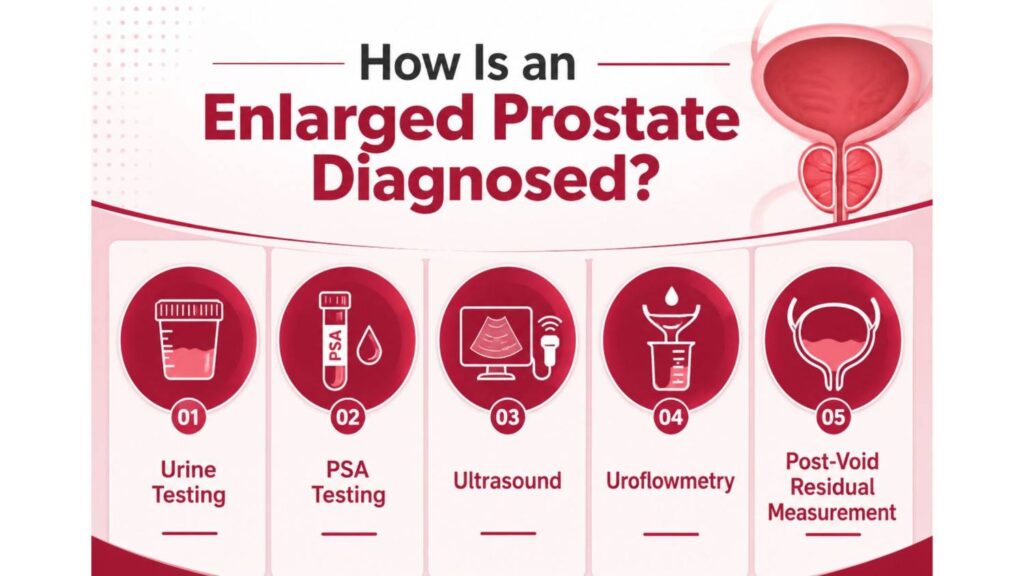
A doctor may review the patient’s symptoms and medical history and perform appropriate tests. Depending on the situation, assessment can include urinalysis, PSA testing, ultrasound, uroflowmetry, post-void residual measurement, or other investigations.
This information can help distinguish uncomplicated BPH from other urinary conditions and guide treatment decisions.
3. It Can Help Protect Bladder Function
When the prostate obstructs urine flow, the bladder may have to work harder to empty itself.
If the bladder cannot empty properly over an extended period, residual urine can remain inside it. In some cases, chronic urinary retention can contribute to bladder damage and other complications.
Addressing significant obstruction before it causes persistent bladder problems can therefore be an important part of long-term urinary health.
4. It May Reduce the Risk of Urinary Retention
Urinary retention occurs when the bladder cannot empty properly. Acute urinary retention can cause a sudden inability to urinate and requires immediate medical attention.
Men with BPH have an increased risk of urinary retention because an enlarging prostate can obstruct the urethra. Treatment decisions should therefore take urinary flow and bladder emptying into account rather than focusing only on symptom frequency.
5. It Can Help Reduce the Risk of Complications
Untreated or poorly controlled BPH can sometimes be associated with complications such as urinary retention, urinary tract infections, bladder stones, blood in the urine, and kidney problems.
Not every man with BPH will develop these complications. However, recognising worsening symptoms and seeking appropriate treatment can help identify patients who need more active management.
6. It Gives You More Treatment Choices
Early evaluation can provide more time to consider different treatment pathways.
For men with mild symptoms that do not significantly affect quality of life, watchful waiting and lifestyle measures may be reasonable. For men with more bothersome symptoms, medications or minimally invasive procedures may be considered. Surgery may be appropriate when symptoms are severe, medications are ineffective, or complications develop.
Waiting until symptoms become severe can sometimes make the decision more urgent. Early assessment allows treatment to be planned rather than simply reacted to.
7. It Supports Better Long-Term Treatment Planning
BPH is not identical in every patient. Prostate size, anatomy, urinary flow, bladder function, age, medical conditions, previous treatments, and personal priorities can all influence the treatment decision.
Early evaluation gives the urologist a clearer picture of the patient’s condition. That information can help determine whether monitoring, medication, a minimally invasive treatment, or surgery is most appropriate.
What Happens If BPH Is Left Untreated?
A common misconception is that every enlarged prostate will eventually cause severe problems. That is not necessarily true.
Some men have mild symptoms that remain stable for years and can be managed through observation and lifestyle changes. NIDDK notes that men with mild symptoms that do not affect quality of life may be managed through watchful waiting and regular checkups.
However, ignoring persistent or worsening symptoms without evaluation is different from medically supervised watchful waiting.
Possible problems associated with BPH can include:
- Increasing urinary difficulty
- Incomplete bladder emptying
- Urinary retention
- Recurrent urinary tract infections
- Bladder stones
- Blood in the urine
- Bladder dysfunction
- Kidney-related complications in some cases
This distinction is important when considering Why Early Treatment for Enlarged Prostate Leads to Better Outcomes. Early treatment does not mean every patient needs immediate intervention. It means the condition should be assessed and monitored appropriately.
When Should You Seek Evaluation for an Enlarged Prostate?
You should consider speaking with a healthcare professional if urinary changes become persistent, troublesome, or progressively worse.
Signs worth discussing include:
- A noticeably weaker urine stream
- Increasing urinary frequency
- Repeated nighttime urination
- Difficulty starting urination
- Urgency that is difficult to control
- A persistent feeling of incomplete bladder emptying
- Recurrent urinary problems
- Increasing difficulty passing urine
Certain symptoms require more urgent attention. If you suddenly cannot urinate at all, seek immediate medical care because acute urinary retention requires prompt treatment.
How Is an Enlarged Prostate Diagnosed?
Why Early Treatment for Enlarged Prostate Leads to Better Outcomes also depends on accurate diagnosis. Treatment should not be selected simply because a man has urinary symptoms.
A healthcare professional may begin by discussing:
- The type of urinary symptoms
- How long symptoms have been present
- How frequently they occur
- Their effect on sleep and daily activities
- Current medications
- Previous urinary or prostate problems
- Relevant medical history
An International Prostate Symptom Score may also be used to quantify symptom severity.
What Are the Treatment Options for BPH?
Why Early Treatment for Enlarged Prostate Leads to Better Outcomes does not mean choosing one specific treatment for everyone. BPH management exists on a spectrum.
Lifestyle Management
For men with mild symptoms, lifestyle changes may help reduce urinary problems. These can include limiting fluids before bedtime, reducing caffeine and alcohol, remaining physically active, and avoiding medications that may worsen urinary symptoms when medically appropriate.
Watchful Waiting
Men whose symptoms are mild and do not significantly affect quality of life may be monitored rather than treated immediately.
Regular follow-up is important because the condition and symptoms can change over time.
Medications
Several medication categories are used for BPH. Alpha blockers can relax muscles around the bladder neck and prostate, while 5-alpha reductase inhibitors can help slow prostate growth or reduce prostate size in appropriate patients. Other medications may also be considered depending on symptoms and individual circumstances.
Minimally Invasive Treatments
When medication is inadequate or a patient prefers a procedural option, minimally invasive treatments may be considered.
Transurethral water vapor therapy, commonly known as Rezum, is one such option. It uses water vapour to treat targeted enlarged prostate tissue.
Surgery
Surgical treatment may be considered when symptoms are severe, medication does not provide sufficient benefit, or complications develop. Procedures can include techniques such as TURP and laser-based prostate treatments.
Can Early Treatment Help You Avoid More Invasive Procedures?
This is one of the most important questions surrounding Why Early Treatment for Enlarged Prostate Leads to Better Outcomes.
Early treatment cannot guarantee that a man will never need a procedure or surgery. BPH can progress differently from one person to another, and treatment effectiveness varies.
However, early evaluation can help identify the appropriate treatment stage before symptoms become severe or complications occur.
For some men, lifestyle changes and monitoring may be enough. Others may benefit from medication. Patients who continue to experience significant symptoms may eventually discuss minimally invasive procedures such as water vapor therapy.
If surgery is eventually necessary, early evaluation can still be valuable because it allows the decision to be made based on the patient’s condition rather than waiting until an urgent complication forces the issue.
The objective should therefore be appropriate treatment at the appropriate time, not simply delaying treatment for as long as possible.

What Factors Influence BPH Treatment Decisions?
Every man’s situation is different, which is why Why Early Treatment for Enlarged Prostate Leads to Better Outcomes should be viewed from an individual treatment perspective.
Prostate Characteristics
Prostate size and anatomy can influence which treatment options are technically appropriate.
Symptom Severity
The severity of urinary symptoms and their effect on quality of life are central to treatment decisions.
Bladder Function
Residual urine and urinary flow can provide important information about the degree of obstruction and bladder emptying.
Medical History
Existing medical conditions, medications, previous prostate treatments, and urinary complications can affect treatment selection.
Personal Priorities
Recovery time, treatment invasiveness, long-term expectations, sexual function, and willingness to take medication can all influence the final decision.
A treatment that works well for one patient may not be the best choice for another. A personalised assessment is therefore essential.
Conclusion
Why Early Treatment for Enlarged Prostate Leads to Better Outcomes is ultimately about recognising urinary changes before they become a major disruption or lead to preventable complications.
BPH does not affect every man in the same way. Some men may have mild symptoms that can be safely monitored, while others may develop significant obstruction, urinary retention, bladder problems, infections, or other complications.
If urinary symptoms are becoming more frequent, disruptive, or difficult to manage, do not simply assume they are an unavoidable part of ageing. A timely urological assessment can help identify the cause, evaluate the severity, and determine the most appropriate next step. For more information about enlarged prostate and BPH treatment, patients can refer to guidance from the NIDDK.